-
-
Through the Fire (2005)
-
New York Post

'FIRE' POWER
By ADAM BUCKMAN
CONEY Island is 2,917 miles away from Portland, Ore., but the journey was a lot longer than that for Sebastian Telfair.
The story of this high school basketball phenom (Abraham Lincoln High, class of '04) is told in this new documentary produced by ESPN that premiered at the Tribeca Film Festival last year and now comes to television for the first time tomorrow night.
Telfair, a 6'0" point guard from the Coney Island projects, was chosen in the 13th round of the 2004 NBA draft by the Portland Trailblazers, straight out of high school.
Draft day - June 24, 2004 - is essentially where the documentary ends (except for a brief, sweet coda tacked on right after it).
Before you get to that point, however, you will travel with Sebastian - and his Lincoln High teammates, coaches, brothers and mother - as he leads his team to its third consecutive city championship.
For most of us, the boardwalk, beach, Nathan's and the Cyclone at Astroland Park are the most famous attractions in Coney Island.
But as you will learn if you watch "Through the Fire," for the people who live in Coney Island, basketball is a much deeper passion than the area's seaside amusements.
Stephon Marbury of the Knicks grew up in an apartment on the floor above Sebastian. The two are cousins.
In addition, one of Sebastian's brothers, Jamel Thomas, was a star at Providence.
Jamel expected to be drafted by the NBA, but was not. In the film, he does everything he can to ensure that Sebastian does not experience the same disappointment.
In one of the film's more illuminating segments, Jamel brings Sebastian to Greece - where Jamel is playing pro ball - to work out with him prior to the draft.
The sequence provides a fascinating look at basketball abroad - something we don't get a chance to see very often.
But most of the action in "Through the Fire" takes place much closer to home.
More than just a documentary about basketball, this lovely movie is one of the best I've ever seen about growing up in New York City, where once in a while, dreams really can come true.
"Through the Fire"
4 STARS -
Daily News Entertainment

THROUGH THE FIRE. Sunday night at 8, ESPN.
By Richard Huff
Dreams of NBA superstardom are as prevalent around New York city as well, basketball goals. But realizing those dreams is also about as tough as keeping a good net on the rims.
Some dreams do come true, though, and ESPN's telecast Sunday at 8 p.m. of "Through the Fire," follows one of them - Coney Island hoop star Sebastian Telfair - as he plays his way off the streets and into the NBA.
The film tails Telfair, a cousin of the Knicks' Stephon Marbury, during his senior year at Lincoln High School, and ultimately as he enters the NBA's draft.
Telfair is a star, no doubt, making it fun to watch as he leads his high school team to the championship and struggles with a decision of a lifetime: playing in college or going pro.
But there's a lot more going on here than just a basketball movie. And Telfair's story isn't just his. It's the story of one of his brothers, Jamel Thomas, and his mother, who previously had put their hopes for financial freedom on Thomas' shot at the NBA.
Thomas never made it, though, breaking his mother's heart. "The whole house was crying. It was like, 'What was I supposed to do?' " Thomas recalls in "Through the Fire." "It was the worst day in my life."
It's with this backdrop of dashed dreams that directors John Hock and Alastair Christopher filmed Telfair and his family, and spent time around the Coney Island basketball courts where Telfair honed his game.
"Right here, this is MSG. We call it the Garden," Telfair tells the camera early on.
"Every block is a basketball court," he said. "You've got no choice but to play basketball."
And play he does. Telfair started out his senior season by signing a deal to go to Louisville and play for Rick Pitino. Over the course of the film, Telfair struggles with that decision, as he weighs the potential instant huge payday of a sneaker deal and whether he'll have a realistic shot at being an early-round draft pick.
Thomas has groomed Telfair for this moment, and it shows. Telfair stays out of trouble, avoids getting tattoos, and when it counts, shows all the right stuff on the court for NBA scouts.
Thomas has a lot riding on Telfair. He's now playing ball in Greece, having never been drafted, while his own NBA dreams ride on Telfair's shoulders.
"Out here, basketball saves a lot of us," says Jeffrey Morton, the brother of Lincoln's coach. "Everybody out here wants to be an NBA player."
Hock and Christopher do a good job letting those involved tell the story, and show emotions in this spare but effective documentary.
In keeping with the family aspect of the story, when Telfair is drafted by the Portland Trail Blazers, the camera is not on Telfair, but Thomas, who breaks down crying, as do the others in his family. The real-life moments that follow are so touching and emotional that it will be hard for anyone with a heart to keep his eyes dry.
Originally published on March 11, 2006 -
Daily News

Through the Fire
Documentary. (1:43). Not rated: Strong language.
It's one thing for a filmmaker to find a great story and reconstruct it as a sort of documentary feature story. It's another to see that story developing and capture it on the fly.
That's what Jonathan Hock accomplished with this superb, ultimately exhilarating account of Coney Island basketball phenom Sebastian Telfair's senior year at Lincoln High. With Hock's cameras in the midst of every game and seemingly private moment in Telfair's life, we watch him lead his team to the state championship, pose for the cover of Sports Illustrated and make his choice between a college scholarship or an Adidas contract and direct shot at the NBA.
With his broad smile and winning personality, Telfair (a cousin of Knick Stephon Marbury) is an easy star to follow, and his coolness under pressure - both to succeed on the court and to earn his entire family a ticket out of the projects - makes his tale a hoop dream for the ages.
- Jack Mathews
Originally published on February 10, 2006 -
am New York

Jay Carr
STAFF WRITER
February 9, 2006
Through the Fire
Jonathan Hock's documentary, "Through the Fire," takes up where "Hoop Dreams" left off. All-NYC point guard Sebastian Telfair, the pride of Coney Island's Lincoln High School, not only carries the ball and the film, but also some superhuman pressures to cash in big and deliver his family from poverty.
Astonishingly poised and every bit as image-savvy as Tiger Woods or Derek Jeter, Telfair hardly ever makes a wrong move, on the court or off. But the fact that he's got it all turns the film into an unbearably suspenseful cliffhanger. When he goes down with a hurt ankle, you stop breathing. When he scores a lucrative sneaker contract, you fear the fancy sneakers might make him a target.
Because ESPN sponsored it, the film shies away from looking hard at the value system that could engulf Telfair. But it's the year's most gripping film yet. -
TimeOut New York

Time Out New York
By Damon Smith
2/9/2006
In this captivating documentary, Jonathan Hock trails hotshot Coney Island baller Sebastian Telfair during his senior year, when the charismatic point guard led his Lincoln High School team to the 2004 city championships at Madison Square Garden. But there's a lot more at stake than a trophy: Committed to coach Rick Pitino and the University of Louisville, yet lured by the prospect of sneaker contracts and untold wealth as a big-league player, Telfair faces the tough decision of whether to attend college or enter the NBA draft. With pro scouts prowling on the sidelines, Telfair's also wise to the fact that his older brother Jamel Thomas, a Big East star, failed to make the cut years before and now labors as a contract hooper in Greece.
Although "Through the Fire" touches on themes examined in "Hoop Dreams" - family bonds, ghetto aspiration, crushed hopes, an exploitative industry - Hock's film is structured as a pure adrenaline rush, savoring the emotional highs of Telfair's year of triumph with unusually visceral, nerve-jangling game sequences courtesy of embedded lensman Alastair Christopher. Candid interviews with aging street players and assistant coach Daniel Turner - Telfair's eldest brother and number one fan - add poignancy to the story, as does the late presence of Thomas. Yet the undisputed star is Telfair himself, a charming, articulate striver well aware that basketball is "no game," but a million-dollar biz that thrives on wholesome images. -
The Boston Globe - boston.com

MOVIE REVIEW
Basketball documentary drives home its point
By Wesley Morris, Globe Staff | February 10, 2006
In 2003, Sebastian Telfair was an 11th grader and the biggest star on New York City's public basketball courts. Like most popular high school basketball players, Telfair had a fan club, but few people in the history of high school ball had Jay-Z, Ahmad Rashad, and Derek Jeter perched on the sidelines of their games. Telfair did, and he jolted them out of their seats with his electric shot-making. Coach Rick Pitino personally tried to woo Telfair to come play Division 1 ball for him at the University of Louisville, but he could see the writing on the wall: the NBA was hot for Telfair, too.
Jonathan Hock's documentary ''Through the Fire" trails Telfair for the year he weighed his options. The film has the trappings typically associated with a must-have basketball prospect. Telfair lives with his siblings and single mother in a Coney Island housing project. He wants to move his family somewhere safer, and the NBA is a compelling express route. But what Hock's film finds is much richer and more resonant than the average exit-from-the-ghetto tale.
For starters, Telfair isn't the first kid in his family to get near the NBA draft. His brother Jamel Thomas, who spent four years playing for Providence College, was burned in 1999. What seemed to be a sure thing wasn't, and Jamel, seduced and essentially abandoned, went off to play in European leagues. The news broke his mother's heart. And it couldn't have been easy for anybody in that household to know that Jamel and Sebastian's cousin, Knicks star Stephon Marbury, had been drafted as a college freshman in 1996. Sebastian's fortunes seem to be déjà vu all over again. ''Through the Fire" follows a young man being lured by the NBA, and quietly captures his transformation as he sails into the corporate marketplace on an endorsement deal. Doubters worry that if Telfair doesn't head to Louisville, he'll be ill-prepared for professional basketball. More than once we hear that he's too short (5 feet 10 inches or 6 feet, depending on which skeptic you ask) and that his shooting is streaky.
The movie is wonderfully attuned to revealing Sebastian and his family as developed characters. Hock clearly likes Telfair, in part for the same reasons that we do: He has a killer smile, and he loves his momma. But he's not a momma's boy. Telfair's miked during some games, and throughout one contest you could fill a dumpster with the trash he talks. At the McDonald's All-American Game, he calls his fellow All-Americans country boys and, during the main event, cajoles players to pass him the ball so he can hand it off to a scorer -- with enough assists he could break a record. Hilariously, he's praised for his selflessness after the game.
Telfair's brazen antics are tinged with burgeoning materialism, and because Hock's aim is a kind of objectivity, he doesn't use commentary from the player's family and friends about his evolution, although his brother Daniel Turner and his coach seem to be just as preoccupied with success' trimmings. But it's hard to blame Telfair for letting his celebrity go to his head. If I were on the cover of Sports Illustrated in the 12th grade, there'd be no living with me either.
Since the NBA drafted Darryl Dawkins and Bill Willoughby in the 1970s, it has always fretted about whether high school kids belong among its elite. The second-guessing began again in 1995 with the drafting of Kevin Garnett: There's no proven farm system in the NBA to groom the players; it sends a bad message about the value of a college education. The association recently set the minimum age at 19. But this is a social dilemma as much as it is a sports-entertainment problem.
What we see in ''Through the Fire" is what we see in urban neighborhoods all over the country. Basketball transcends the merely recreational. It's a vocation for a lot of young men and women that, given the low odds of professional success, seems like a dream that crushes far more spirits than it lifts. But the stakes for a prodigy like Telfair seem unfairly high. College? Or a once-in-a-lifetime opportunity to raise a family out of poverty? It's sad, but Rick Pitino will probably lose every time. -
Variety

By RONNIE SCHEIB
Coney Island hoop prodigy Sebastian Telfair's story is told by documaker Jonathan Hock in 'Through the Fire.'
Jonathan Hock's docu jettisons ethical quandaries about the questionable relationship between corporate-funded sports and kids from the projects in favor of a heroic, suspense-filled story that plays like well-structured fiction. With a real-life athlete as talented and charismatic as Coney Island hoop prodigy Sebastian Telfair, almost any outcome would probably have made for good drama, but Hock lucked out when life provided a happy ending. Upbeat Urbanworld documentary prizewinner, full of strong personalities and crisply edited court action, could score well in sports venues.
Since sixth grade, Telfair qualified as a legend in his basketball-obsessed neighborhood. Now in his senior year of high school, scouts follow his games, sportswriters analyze his every move, and Jay-Z and Spike Lee are frequently in the stands watching.
Telfair calls a well-attended press conference to announce his choice of university (Louisville), and when his high school team wins the championship for the third straight year, speculation is rife as to whether he will join the ranks of young players drafted by the NBA straight out of high school.
No sooner does Telfair answer that question, opting to try for pro ball (helped along by the stick-and-carrot coincidence of a fatal shooting where he lives and the offer of a multi-million dollar sneaker contract), than the press begins to turn against him, emphasizing his spotty shooting record and under-6' height. The suspense then shifts: Will he be drafted by the NBA or will he wind up like his talented, older brother, passed over after a stellar college season, and now playing professional ball in Greece?
Helmer Hock, whose credits include the ESPN skein "Streetball" and the Imax "Michael Jordan to the Max," sticks like glue to Telfair. Sebastian's coach and brothers provide running commentary on his career while lenser Alistair Christopher's HD camera trains on Telfair as he ducks, bobs, weaves, passes and dunks his way through crucial, nail-biting championship games and attempts to prove his worth as a team player.
Extensive media coverage of developments in the unfolding saga neatly colors pic's exposition. But more than anything else, Hock's job is expedited by Telfair himself -- the kid's clean-cut looks and million-dollar smile clearly as relevant as his athletic prowess in winning him his lucrative sneaker contract, his front-page spread in "Sports Illustrated" and even his effortless domination of the screen.
Having had years to fully accept his talents and assume responsibility for parlaying his gifts into a better future for his family, Telfair appears serenely conscious of all the forces at play. Extremely media savvy (his cousin is Knicks star Stephon Marbury), Telfair seems capable of taking the hoopla in stride.
Given his subject's supreme self-confidence, Hock's up-close-and-personal approach is relentlessly forward-driven and leaves no room for questioning anything beyond the unfair arbitrariness of a fickle system that rewards one brother with millions and another with exile to Greece.
Tech credits are polished. -
The Hollywood Reporter

Nov. 14, 2005
Through the Fire
By Michael Rechtshaffen
The ill-fitting generic title aside, "Through the Fire" is a highly satisfying documentary tracking the hoop dreams of basketball bright light Sebastian Telfair as he made that rare leap from high school all-star to NBA draft pick.
In possession of a killer smile, the charismatic pride of Coney Island, N.Y., makes for an ideal central subject, and co-directors Jonathan Hock and Alistair Christopher work in a no-frills, straight-ahead style that lets Telfair's involving story speak for itself.
It's one that includes the 6-foot point guard's older half-brother, Jamel Thomas, who had been passed over by the NBA years earlier and plays basketball in Greece to help support the large family, while another brother is content to remain in the background as an assistant coach at Telfair's Brooklyn high school.
Accompanied by some terrific game footage, the film, shot on digital video, is there beside Telfair when he lands the Sports Illustrated cover and signs an Adidas sneaker deal. The cameras also capture numerous intimate, quietly emotional moments, most movingly when he finds out he's been drafted by the Portland Trail Blazers amid the publication of numerous newspaper articles that weren't exactly enthusiastic about his chances.
Bottom line: "Through the Fire" is a highly satisfying documentary.
Copyright 2005 The Hollywood Reporter -
The Village VOICE

Village Voice (2/8/06)
Tracking Shots
'Through the Fire'
by R. Emmet Sweeney
February 7th, 2006
A riveting doc of hoop dreams realized, Through the Fire follows Coney Island legend (and current Portland Trail Blazer) Sebastian Telfair through his final high school season, focusing on his decision to skip college and go pro. An ESPN production (scheduled to air on March 12), it's slickly shot and structured like a Bruckheimer sports weepie, but director Jonathan Hock also shows the image-production of Telfair as star. Living in the projects, Telfair sees his cousin Stephon Marbury hit it rich in the NBA, while his brother Jamel Thomas, a starter at Providence, is left undrafted and has to join a European league to pay the bills. Jamel takes every precaution to ensure Sebastian's success on and off the court, coaching him to convey a "Tiger Woods" image, clean and smiling. Media and player are mutually manipulated—Telfair puts up a front, Sports Illustrated gets its cover boy, and the sneaker contract gets signed. Various other mentors want a piece: his vociferous coach Tiny, Louisville coach Rick Pitino, Adidas execs, his oldest brother Daniel—even Jay-Z shows him some love. Despite all the distractions, Sebastian remains committed to basketball, as the reams of eye-popping game footage attest. The kid's got a sick hesitation move. Jumper's still spotty, though. -
Entertainment Insiders

A Dream Come True
by Warren Curry
I first caught the documentary "Through the Fire" at the AFI Film Festival last November, and I spent the remainder of 2005 telling anyone who'd listen that it was the best film I'd seen that year. With its forthcoming theatrical release (it will also air on ESPN in March), only time will tell if it will be my favorite film of 2006, although I can't imagine I will encounter many better. Spirited and utterly absorbing, "Through the Fire" chronicles the year that changed the life of New York City high school basketball superstar Sebastian Telfair (and residually, those close to him). Even viewers without a passion for basketball, or sports in general, will connect with this accessible, exciting, rags-to-riches story.
Making headlines since the age of nine, 5'-10" point guard Sebastian Telfair entered his senior year of high school in 2003 already a bona fide New York City basketball legend. Attempting to lead Brooklyn's Lincoln High School to an unprecedented third straight city championship, Telfair is the focal point of a media blitz as the season begins, which only intensifies over time. Injected with a ferocious competitive spirit, Telfair's broader goals include attending the University of Louisville to play for renowned coach Rick Pitino, eventually landing in the NBA and lifting his family out of their impoverished lives in Coney Island.
As Telfair, the cousin of NBA star Stephon Marbury, pushes his team toward another city title, his outstanding play invites a whole new level of fanfare and scrutiny. ESPN televises his games to a national audience, and celebrities such as Jay-Z, Spike Lee and New York Yankees' all-star Derek Jeter, not to mention a host of NBA scouts, are regular fixtures in the stands. Telfair's appearance on magazine covers is next, and soon it appears a jump straight to the NBA, complete with a multi-million dollar sneaker endorsement deal, is well within his reach. Of course, when it appears his stock has risen to its highest point, a wave of critical backlash predictably crashes in from the so-called basketball experts.
What keeps Telfair's head from floating into the clouds are memories of his family's collective heartbreak when his older brother Jamel Thomas was shockingly snubbed by the NBA after a standout a college career. Coney Island, like many American inner city areas, offers its residents very few dreams, and when those dreams are shattered, it can exact a crushing toll. The documentary's most sobering moment is provided by Asher Beard (aka Tick Tick Boom), a former Coney Island teen hoops sensation who didn't make it to the next level, when he comments while sitting in a neighborhood playground, "As long as I'm here, it's pain." It becomes apparent in short order that Telfair is carrying the hopes of his family and community on his shoulders, and only the strongest individuals will refuse to buckle under the weight. Sebastian Telfair is that individual, and it's impossible not to admire his determination.
NBA fans will know going in that the story has a happy ending, as Telfair is currently a starting point guard for the Portland Trailblazers. But this does nothing to diminish the stakes of the drama, or its ultimate payoff. Director Jonathan Hock gives the film a relentless momentum, creating a palpable sense of excitement at every turn. Telfair has charisma to spare, and with the guidance of Jamel, who supports his family while playing professional basketball in Greece, and his other older brother Daniel Turner (who also serves as Lincoln's volunteer assistant basketball coach), appears to have been groomed from an early age to deal with the onslaught of attention. He's brash, confident and exudes the fiery (and occasionally mean) competitive attitude required to achieve athletic greatness.
"Through the Fire" will inevitably draw comparisons to the fantastic 1994 documentary "Hoop Dreams." It, more or less, picks up where "Hoop Dreams" left off, narrowing its sights on a person making the difficult jump from amateur phenomenon to professional success. While it's much smaller in scope and offers less social commentary than "Hoop Dreams," "Through the Fire," to borrow a sports' cliché, plays within itself exceptionally well. The eventual denouement -- even though most viewers know the outcome -- still manages to be completely satisfying.
"Through the Fire" is the kind of crowd-pleasing (but not necessarily "feel good") entertainment that warrants mass audience applause at its conclusion, and the rare documentary I feel confident highly recommending to anyone and everyone.
Warren Curry/reviewed: 2006-02-09 -
LA WEEKLY

For February 10 - 16, 2006
THROUGH THE FIRE Jonathan Hock's entertaining documentary about a year in the life of high school sports phenom Sebastian Telfair is a Horatio Alger tale for the bling and basketball age. Though some will see this fast-paced film as proof that hoop dreams really can come true, the real strength of Through the Fire lies in its careful, often indirect questioning of the moral universe of professional sports and big-money endorsements. Exiled to Greece, where he plays bush-league basketball to support his family, Telfair's older brother (and former NBA prospect) Jamel Thomas lives in the shadows of dreams deferred, and his scenes give the story dramatic, almost mythic weight. This ESPN Films release may not have the patience, scope or nuance of the seminal 1994 basketball documentary Hoop Dreams (which holds up as the cinematic equivalent of a Theodore Dreiser novel), but Through the Fire shares its spirit, even if the film's deeper views on its subjects — and society — are seen only in flashes. (James C. Taylor) -
indieWIRE

the leading source on independent film since 1996
Winning Night: "Rize" and "Through the Fire"
[Tribeca daily dispatch by Eugene Hernandez.]
Seeing a good movie really can make for a fun evening. In the case of the Tribeca Film Festival last night, two heartwarming documentaries made for a great night downtown. David LaChappelle's "Rize", which I watched twice back at Sundance, is a terrific film about the emergence of a fast-paced form of dancing in South Central Los Angeles, the people that LaChapelle follows include local celebrity Tommy the Clown, leader of a group of kids turning to clown and krump dancing as a way to express themselves. So, the real discovery for me last night was Sebastian Telfair, showcased in "Through The Fire", Jonathan Hock's loving look at the basketball player's senior of high school as he struggles with the decision to either go to college or try to break into the NBA.
Cheers and a standing ovation greeted the film at its special screening last night, with many of Telfair's friends and family from Coney Island in attendance. Telfair, a savvy young kid with a winning smile and a warm family, shines in this sharply shot and assembled doc. While the movie probably should have dug deeper into the complex dynamics of the Telfair family and the cut-throat, seductive world of high school athletics, its hard to fault a film packed with so much warmth. Telfair, the cousin of Knicks star Stephon Marbury, faces a tough decision as a middle child among a family of basketball brothers and at the end of the film, audiences may debate whether he made the right choice, but no doubt they understand his reasons and applaud his success.
Comparisons to the more complex and in-depth "Hoop Dreams" are inevitable but not really justified. "It is about rebirth and community, just like this festival," enthused Hock on-stage during yesterday's Tribeca Film Festival press conference. "Like this neighborhood, the Telfair family did not have things always break their way," but he added, "They did not lose sight of their dreams."
Buyers were buzzing after Thursday's screening, with some execs planning to show the picture to higher-ups at various companies. Another showing is on tap tomorrow in Tribeca. Cinetic Media is selling the film and it will undoubtedly find a distributor. -
Documentary Insider

AFI Fest day 10 - the final stretch...
Day 10 I attended the TIMESTALKS 2 - The War Documentary: A Panel Discussion... I left the panel a little early to jump into Through the Fire. Let me start by saying that I only know a couple things about basketball:
1. Los Angeles has 2 basketball teams.
2. You have to put the ball through the hoop to score.
Other than that I'm pretty clueless. Through the Fire follows Sebastian Telfair through his senior year of high school basketball. It doesn't take long to figure out that this film is gonna be good. About 20 minutes in I looked at watch and noted in my notebook, "I'm invested." That says a lot! For someone who couldn't care less about basketball to want all the hopes and dreams of a Coney Island high school baskeball player to come true. Sebastian Telfair is charismatic, he loves his mom and for a 5 foot 10 inch player he kicks ass on the court.
I loved this movie. It has suspense, great music and editing, it shows passion and confidence, fleshed out real characters and as I sit here while the festival awards ceremony is taking place I predict it will win an award or two.
Emmy award winning filmmaker Jonathan Hock has done a tremendous job illustrating the exuberance of an athlete born to play basketball. I even found myself searching my TiVo today to see if I could find Telfair playing any games coming up. And…that speaks tomes for someone who has never watched a televised basketball in her life. - Sarah Jo Marks -
Upscale Magazine

Upscale Magazine
November 2005 Film Reviews
By Dwight Brown
Through The Fire (***1/2)
Hock Films
College or basketball? On the surface you'd want your children to get a higher education. But these days, hitting the books and not the court isn't an easy decision.
Sebastian Telfair, star player on Lincoln High School's championship basketball team, stands at a life-altering crossroads. He's a senior being scouted by the pros. As the cousin of Knicks' hoopster Stephon Marbury, he's tasted the good life. As the younger brother of Jamel, a thirtysomething minor-league player who was once courted by the NBA but never drafted, he knows defeat too. What do you do when you've got eight brothers and sisters, a single mom and people being shot outside of your housing project? College or courts?
Emmy Award winning director Jonathan Hock's camera is invisible. You read Sebastian's mind. Share his fears. Dream with him. His home life is an open book. His mother's nurturing spirit is comforting. Jamel handles surrogate father duties like a saint; when Sebastian is oh-so-close to being drafted but faltering, Jamel gives him basketball boot camp training and a tough love that turns the anxious boy into a man.
A riveting film. You'll be pinned to the edge of your seat. You'll want Sebastian to make the right choice. Will he? Bring your hoop dreams. Bring a hanky too. -
Cinema Crazed

THE GOOD:
I'm no sports fan. I find no interest in sports, and I really don't watch it, but "Through the Fire" is not about sports. You don't have to like sports to know how damn good this is. It's typical to say such a thing, but as a man who hasn't seen a full basketball game in eleven years, it says something about the sheer quality and excellence of "Through the Fire", that it was able to grab a hold of me and keep me glued to the screen. It's not an insider documentary, it's not a new look at sports, and it is not an exploitative peek at a man who ruined himself. It's simply a down to Earth story about a young man who worked for his dreams and achieved them.
"Through the Fire" is a wonderful, and exciting look in to a year in Sebastian Telfair's life and struggle to make the NBA draft. Through this journey we discover not only him, but we also discover his family. His loyal mother, immensely loyal brothers, and just pure family love. These are brothers whom stick by one another and pour all their energy in to Sebastian to help him make the NBA draft. "Through the Fire" is an excellent inspirational documentary about how anyone can really rise above their surroundings if they work hard enough. Why Sebastian Telfair? Well, why not? He's a legend in his home town (grew up in the same city as I), he's smart, he's charismatic, he's humble even when literally everyone is pulling him aside saying it's all about him, and he's focused. Not to mention he has amazing skills on the basketball court.
The film, beautifully directed by Jonathan Hock, has an exuberance and energy about it that will take even those not fans of sports and bring them in to the story. Speaking as someone who qualifies as a non-fan, even I was engrossed in the basketball scenes. Telfair is utterly amazing on the court, and everyone around him is drawn in to him and he repays them for it. Celebrities appear at the games he plays in, and reel in their seats, nearly jumping in utter awe at his moves. And the director plays off of their reaction using the soundtrack and great camera shots to his advantage. He involves the crowd in to the scene of this young man and lets us connect with him. His brothers, one a basketball coach, one a basketball player who didn't make the draft but went on to basketball in Greece yet poured his energy in to Sebastian, and, in a heart wrenching sub-plot, Sebastian's youngest brother who worships the ground he walks on and hopes to become like him in the future. And Hock doesn't just hog all the spotlight on Telfair.
Any hack would have focused on Sebastian and only Sebastian, but Hock explores his family, and the film never loses its charm, or appeal when it explores their lives. The question raised from beginning to end is can this guy who is intelligent, charming, charismatic, and talented keep the NBA from corrupting him and turning him in to another sports prima donna? You're on constant edge wondering this, and you have no choice but to sit, watch, and wait to see if he excels, or becomes his own worst enemy. It also explores how one can set a path for themselves and by circumstances, or ones own zeal, can lose their focus and end up losing it all in an instant.
Constantly, Hock introduces corporate elements as a factor that could spell doom for Telfair's training and personality. Sneaker companies, clothing companies, franchises all seek him out, and its his family element that must decide to keep his mind on the game or else it will all be in vain. Telfair looks like a great guy, he's not full of himself but is never afraid to gloat, he's humble, but he's also proud, and Hock knows how to pinpoint this young man's niche. But we also know he can be exploited, too, and we hope he doesn't. And when it wants to be "Through the Fire" is also an exciting look at how the game is played, but through it all you wonder of Telfair's fate, because Hock brings you close, and reminds us its not the rewards that matter, it's the journey.
SUMMING UP:
"Through the Fire" is a film for anyone seeking hope and inspiration in their endeavors, and its an excellent documentary in the spirit of "Hoop Dreams" with an engrossing and exciting look at working for your goals and accomplishing them win or lose.
MOVIE NOTES:
Telfair is the cousin of NBA star Stephon Marbury. -
The Reel Deal
*****THE REEL DEAL: Reviewz from the Street*****
by Edwardo Jackson
BIASES: 30 (yikes!) year old black male; frustrated screenwriter who favors action, comedy, and glossy, big budget movies over indie flicks, kiddie flicks, and weepy Merchant Ivory fare
THROUGH THE FIRE (Unrated)
MOVIE BIASES: I've seen his game; it's time for the story behind the name.
MAJOR PLAYERS: Sebastian Telfair, producer/co-director Jonathan Hock (TV's "Streetball: The And 1 Mixtape Tour")
If you're a sports fan like I am, you're familiar with Sebastian Telfair. Appearing on magazine covers as a ninth grader – yes, NINTH GRADER – Telfair has spent the majority of his life in the spotlight. Unlike most coddled, pampered-since-pre-adolescence high school athletic superstars, Sebastian's story is as dramatic, engaging, and funny as anything scripted I've seen all year.
"It's like he's got a cult following. He's got a smile, he's marketable." That he is indeed. Picking up from the beginning of Sebastian's senior year, one in which the high school and pro basketball worlds hover with interest, "Through the Fire" follows the ups and downs of this personally tumultuous year. Sure, there are harder things in life than to be an extraterrestrially gifted basketball player, but in Sebastian Telfair's world, (as the saying goes) with "great power comes great responsibility." Embarking upon the goal of taking his Coney Island Lincoln High School team to an unprecedented third straight New York Public School Athletic League championship, Sebastian is beset by the problems of his own low-income, basketball-obsessed neighborhood, the expectations of his family and friends, the temptation to skip college (after signing with University of Louisville) and go pro, and the media scrutiny that comes with stardom of any ilk – always ready to tear down the pedestal for which they had built him. Underlying it all is the antagonist of Failure, a Grim Reaper who had struck his older brother Jamel Thomas by having dashed his NBA hopes when he went undrafted on Draft Night, lurking in the forefront of Sebastian's mind to do the same to him.
"Through the Fire," a case study on society's misplaced values of sports, celebrity, material wealth, and capitalism, is a film that's hard not to like. Hock, and his ubiquitous cinematographer Alastair Christopher (TV's "Streetball"), seemingly blanket Sebastian everywhere, capturing the true big business that has molested the fictitious sanctity of "amateur" high school sports. Hock and Christopher follow Sebastian from practice to personal appearances, eavesdrop on legal tightroping discussions between Sebastian and shoe company executives, and go on the road with Sebastian's high school team, which is also awash in Telfair's t-shirt-making, sweaty sock-autographing, demographically universal cult of celebrity. No doubt able to afford clearances for such Roc-a-Fella music as Jay-Z's "Moment of Clarity" (GREAT opening music and sequence for the movie) due to the mutual fandom between the rapper and the teenage basketball star, "Fire" uses only the best of urban hip hop around the time of the movie's filming, the 2003-2004 basketball season. While most of the footage is high definition handheld, the camerawork is extremely steady and informative, never distracting.
With a cast of characters so real, who needs fiction? If it isn't the unapologetic materialism of Telfair's brother/assistant coach Daniel Turner, then it's the equally unapologetic bravado of baby-faced head coach Dwayne "Tiny" Morton entertaining you. Jamel Thomas provides stern, loving leadership over his brother's career from afar, whether its spiriting Sebastian off to Greece where he plays pro ball to help him train or vetoing Sebastian's desire for tattoos as bad for his image ("Clean, happy, smilin' all the time, nice teeth…That's him.")
And that IS him. Fairly egoless for a basketball phenom (despite being the all time New York State scoring leader, in the McDonald's All-American game, the point guard tries to set an ASSISTS record), Sebastian Telfair, with his great, ridiculous smile, clean-shaven, boyish good looks, and true leadership spirit, is a wildly charismatic persona that the camera simply adores. It's a two-way love affair: Who knew Telfair was so damn funny (on a trip to the Oklahoma State Capitol, in session, he remarks, "I'm not used to being around people with jobs")? When not playing natural comedian, he takes on the personal challenges of leadership and accountability very seriously, willing his team on to victory on several occasions. Knowing full well that "Everybody starts, nobody finishes when it comes to basketball" in hoops-crazed Coney Island, Sebastian takes the business of basketball very seriously, as he puts the wooing shoe companies through their paces while evaluating the difficult decision to go to college or turn pro. To you or me, that's not much of a decision – Telfair will eventually make it to the NBA, right? Well tell that to his brother Jamel, who did the so-called right thing and went to college for four years, even leading the Big East Conference in scoring at Providence College, yet ended up undrafted and forced to earn his roundball living overseas.
Although several similarly compelling stories war for attention in this movie, at heart, it's a story about two brothers, brothers in blood, brothers in talent, brothers in dreams. The interaction between the two of them, despite the younger one being the most talented, is protective, touching, and a tad businesslike. As if it were his own career in the balance, Jamel's fierce protection of Sebastian's image, exposure, mentality, and leadership is one of the more quietly moving relationships I've seen onscreen all year. In fact, the way the whole family and community rallies around Sebastian, not merely as one of their own who can make it, but also as a guy that they genuinely LIKE, goes a long way toward exploding stereotypes of hood behavior.
On the flip side, innocuously if not inadvertently, "Through the Fire" is an indictment on the failure of opportunity in capitalism. When a Coney Island native (truthfully) attests that "There would be nothing out here" without basketball, an activity that keeps kids in the community occupied and safe, what does that say about socioeconomic opportunities – and expectations – of young black men? Should the sportswear company wooing process be allowed to begin so early, with shoe companies sending dozens of boxes of product to Sebastian's home? Even though going to college and getting an education is encouraged, can you blame Sebastian for beginning to second-guess his decision when a shooting happens in his projects building? Is it worth it to keep his family in relative squalor while his precious gift could be taken away at any moment or, worse, go unrewarded like his brother's? And why is it that money and the prospect of having money, should bring out the most ghetto fabulous reactions out of people who've never had any? With Jazy-Z, Derek Jeter, and Spike Lee sitting courtside at his HIGH SCHOOL games, who and what defines celebrity? Why is it that old, white men in the South can embrace a young black man like Sebastian on the basketball court but most likely wouldn't want him marrying his daughter off of it?
In order to answer all of these latent – and blatant – questions, that would, of course, require a whole other movie. By wisely choosing to hone in on Sebastian's dream of going pro, the filmmakers have crafted an experience of surprising resonance and emotion that had my screening partner– yep – CRYING at the end of this documentary. Primed to pick up the critically lauded baton from "Hoop Dreams," "Through the Fire" is a complete movie, a cinematic happening that has left me buzzing ever since I've seen it. And it's all because of the indomitable personality, humor, and charisma of a Coney Island kid with the megawatt smile.
With a family full of personalities, including tangential links to his decade older cousin, New York Knicks player cousin Stephon Marbury, it's no surprise that the Telfair family mantra, Rod Tidwell-like ("Show me the moneyyyyy!"), is "The lights are ON!" The lights ARE on. Thanks to Sebastian and the Hock Films crew for allowing us to revel in its, and HIS, glare.
@@@@ REELS
(FOUR REELS)
An urban legend/instant classic.
© 2005, Edwardo Jackson
-
-
The Lost Son of Havana (2009)
-
"**** (out of four)" - The Providence Journal
Movie review: Luis Tiant is 'The Lost Son of Havana' Friday, July 10, 2009
By Michael Janusonis
Journal Arts Writer
In 2007, former Boston Red Sox pitcher Luis Tiant finally got permission to visit Cuba, his native country which he hadn't seen since he got stranded in the United States during a 1961 baseball tour and decided to stay. Cuban ruler Fidel Castro told him and other athletes who were in the United States at the time of the Bay of Pigs invasion that they could either come home and play in Cuba as amateurs or never come home again, thus turning Tiant's three-month trip into 46 years of exile.
Wishing to see his native land again before he died, however, Tiant embarked on his 2007 sentimental journey along with a film crew led by director Jonathan Hock. They recorded Tiant's emotional encounters with family members he hadn't seen in nearly half a century as well as with people he met on the street, some of whom knew of his success in the United States because Cuba is still baseball mad.
The results are the winning documentary The Lost Son of Havana, a very personal and close-up look at one of baseball's greats adrift in a place he once knew as well as the distance between the pitcher's mound and home plate at Fenway Park, but where he is now a stranger.
Hock's film, for which the Farrelly brothers served as executive producers, will largely appeal to baseball fans who remember Tiant's glory years at Fenway as well as to those who want a peek inside Cuba today. They will be rewarded with many shots of everyday street scenes with still-elegant buildings and 1950s automobiles. (The film begins a limited weeklong run Friday at a handful of theaters in the Boston orbit, including the Showcase Cinemas in Warwick.)
At the age of 67 (when Lost Son of Havana was made), Tiant has grown into a bear of a man who is affable, kindly and is sometimes bowled over by the people he meets and the sights he revisits, a Cuban Santa Claus.
On his journey, he carries along a large photograph of his father. Luis Tiant Sr., known as Lefty Tiant, was himself a star baseball player in Cuba who once dreamed of joining the major leagues in the United States where he spent 17 summers. Yet because of the times (the 1930s) and his dark skin color, Lefty never got beyond playing in America's Negro Leagues, although during an exhibition game he got to strike out Babe Ruth.
At the outset we're told by unobtrusive narrator Chris Cooper that Tiant never saw his parents in their native Cuba again, although it's only near the end of Hock's documentary when one discovers that he did see them before they died ... in the United States.
In the mid-1970s Castro himself allowed Tiant's parents to come to the U.S. to see their son play at Fenway Park and to stay as long as they wished. In one of the film's most buoyant moments we see Luis Sr. tossing out the first ball at Fenway in a game pitched by his son.
In fact, Tiant's parents stayed in the United States more than 18 months and saw him pitch in the 1975 World Series against Cincinnati. Later they both died here within days of each other, something which leads to the film's most poignant and emotional moments as Tiant recounts that dreadful time to one of his aunts in Havana while she offers him sympathy and consolation. It's actually the high point of Lost Son of Havana, which intercuts newsreel footage of Tiant's baseball career with his journey back to the place he still calls "my country," even though much of it has become alien to him.
He visits the house where he grew up in Havana and visits with relatives, sometimes dropping in unannounced. He visits the brother of former teammate Tony Oliva, who stayed in Cuba to play baseball, and to discuss the divergent ways their lives turned.
We see his several comebacks and hear testimony of Tiant's greatness from former Red Sox stars Carlton Fisk and Carl Yastrzemski. We see him sauntering over to a Havana park where the locals hang out to talk baseball and watch their reactions when one of the film crew tells them Tiant is standing behind them.
We see him at the high points of his career and the low points as Tiant tries to get back into the major leagues after being shipped to the Pittsburgh Pirates' farm team in Portland, Ore. And he made that comeback ... twice!
Hock tells us two stories with his film — Tiant's trip to the past and Tiant's own past in baseball. Fortunately, Tiant is a very engaging and colorful character who takes us along for the ride.
****The Lost Son of Havana
-
"Hock pulls off something kind of miraculous..." - Ain't It Cool News
Tribeca Film Festival '09: Mr. Beaks Journeys To Cuba With Luis Tiant, THE LOST SON OF HAVANA!
What if you reached the pinnacle of your professional career, but knew that your mother and father - the two people most responsible for helping you realize your dream - were locked away in a prison, unable to share in your success and, perhaps, unaware of your accomplishments? It'd break your heart, right?
That's essentially what Luis Tiant had to contend with throughout the bulk of his major league baseball career as a starting pitcher for the Cleveland Indians, Minnesota Twins and Boston Red Sox. While "El Tiante" was establishing himself as an unstoppable force on the mound for the Indians from 1964 to 1969 (a hapless squad that only once finished above fifth place during that period), his parents were living under the totalitarian rule of Fidel Castro in Cuba. Were they aware of his progress? Were they proud? Were they well? Save for censored correspondence, Tiant had no way of knowing how any of his loved ones were faring under Castro's dictatorship - and, save for pirate radio/TV broadcasts, they had no way of knowing whether their beloved Luis was thriving or failing in the United States.
If all you know of Tiant's career are his unique back-to-the-plate delivery* and his 1970s comeback with the Red Sox, which peaked with his heroic battle with the Big Red Machine in the 1975 World Series - or if you don't know his story at all - then you need to see Jonathan Hock's heartfelt documentary THE LOST SON OF HAVANA. Based around Tiant's 2007 return to Cuba - his first trip home in forty-six years - Hock's film works as both a Tiant family history and a humanistic, albeit deftly apolitical, examination of the poverty-stricken country during what are surely the last days of Castro's reign. Though an absolute must for baseball fans, who'll once again get caught up in the drama of that epic 1975 postseason tilt, it's also a heartbreaking account of a late-in-life family reunion, with Tiant reconnecting and, in several instances, possibly bidding farewell to the loved ones he left behind all those years ago.
The gulf between Tiant's comfortable lifestyle in the U.S., where he currently works as a pitching advisor for the Red Sox, and the squalid living conditions of his surviving aunts and uncles and cousins and nephews is, of course, stunning. It's also the basis for a good deal of dramatic tension, particularly when Tiant first begins kicking around his old neighborhood and encounters an old acquaintance. Though the man is at first pleased to see the pitching legend, he abruptly works into a rage that's fueled by resentment for Tiant leaving and the impossible conditions under which he's had to subsist for the past six decades. Though most of Tiant's relatives express no bitterness, you get the sense that there is some unspoken anger here - especially when Tiant begins handing out "extravagances" like Pepto-Bismol, chewing gum and shampoo. These gifts go over well early on, but they're mere tokens of goodwill; later on, bolder family members will hit Tiant up for cash.
But if anyone can understand this kind of practicality, it's Tiant, who affects a strictly-business swagger with his ever-present dark sunglasses and customary cigar clenched between his teeth. For much of the film, Tiant is impassive; most likely, this is byproduct of having to shut out tragic circumstances in order to excel during one of the baseball's most competitive eras. But there's a big, wounded heart beating beneath this tough exterior. And when Tiant lets his emotional guard down, it's impossible to not weep with him.
Generally, Tiant's sadness derives from the absence of family during the prime of his career. This pain is particularly acute because his father, Luis Sr., was a dominant pitcher for the Negro League's New York Cubans from 1926 to 1948. In other words, his father had already made sacrifices to help pave the way for Tiant's success in the integrated major leagues; though Luis Sr. occasionally got to show his stuff against the best in the game (there's a great story of a showdown with Babe Ruth), he was never able to do it on a consistent basis. So Tiant was living two dreams when he made it to the bigs. Sadly, most of this dream (at least until the 1970s) was little more than a rumor to the elder Luis.
What's most impressive about Hock's film is the way it refuses to use El Tiante's triumphant 1975 season as easy, unearned uplift. Yes, his domination of the Cincinnati Reds offsets a good deal of the tragedy in the pitcher's life, but it's not the end of his journey by a long shot. And while it's nice that Hock and company were crafty enough to get around the U.S.-imposed travel restrictions, Tiant's brief stay in Cuba does not wipe away forty-six years of regret - nor does it do much for the Tiants struggling to survive in the economically depressed country. And that's where Hock pulls off something kind of miraculous: rather than indulge in easy political rhetoric (or, worse, ignore the injustice altogether by closing the book on Tiant's relationship to his homeland once his visit is over), he makes this about the people. Slowly, the idea of maintaining, at the very least, the travel ban in the dying days of the Castro dictatorship becomes indefensible. At this point, it's an act of unintentional cruelty. One look at the sorry state of Cuba in Hock's film, and it's clear that the U.S. won. Want to rub this victory in Castro's face? Show his people mercy while he's still alive. Do it for the Tiants and all the other families who've spent half a century hoping to reconnect with their loved ones before it's too late.
THE LOST SON OF HAVANA premieres Thursday, April 23rd, at the Tribeca Film Festival. It will screen again on the 27th, the 30th and May 2nd.
Faithfully submitted,
Mr. Beaks -
"Far more than a sports documentary" - Michael Judge/The Wall Street Journal
Stealing Home
By MICHAEL JUDGE
One of the main attractions of sports is that they're a welcome escape from the politics of the day and the things men do to one another in the name of this or that cause. Occasionally, however, the world of sports and politics collide. And when they do, it's usually without a happy outcome—think of the 1972 Munich Olympics, when 11 Israeli athletes were murdered by Palestinian terrorists; Jimmy Carter's boycott of the 1980 Moscow Olympics; and the subsequent Soviet boycott of the 1984 Los Angeles Olympics.
Pitching great Luis Tiant, the subject of ESPN's "The Lost Son of Havana."
It should come as no surprise then, that "The Lost Son of Havana," an ESPN Films documentary about Red Sox pitching great Luis Tiant's return to Cuba after 46 years of exile, is not a happy tale (Sunday, 6 p.m.-8 p.m. ET on ESPN Deportes; Monday, 10 p.m. ET on ESPN). It is, rather, the story of a refugee's rise to major-league stardom and the torment of returning home decades later to visit family on an island gulag.
"Things could have been different," says Mr. Tiant, overcome with emotion at his aunt's cramped and run-down Havana home. He is, of course, right. The wealth he accumulated in the major leagues could have helped lift his entire family out of poverty. But Castro's revolution dashed any hopes he might have had of playing professionally in his country or returning home to help support his family and the community he left behind. In 2007, he was finally allowed back into Cuba as part of a goodwill baseball game between American amateurs and retired Cuban players.
Written and directed by documentary filmmaker Jonathan Hock, "The Lost Son" begins with a shot of the 67-year-old Mr. Tiant puffing on a cigar and examining an old black-and-white photo of his father, Luis Tiant Sr., a baseball great in his own right who pitched in America's Negro League in the 1930s and '40s. Luis Sr. didn't have an overwhelming fastball but was, like his son, an absolute master of the screwball and other off-speed pitches. With his "herky-jerky" windup and off-beat delivery, he dominated the Negro League and twice defeated the Babe Ruth All-Stars in exhibition play, holding the Babe to just one single.
There's no doubt that Luis Tiant Sr. had the stuff to be a star in the majors. But by the time Jackie Robinson broke the color barrier in 1947, Luis Sr.'s professional baseball career was over and he was forced to return home to Havana.
The dream of playing in the major leagues, however, lived on in his son, and in the summer of 1961 Luis Jr. left Havana for a three-month stint in the Mexican league, where he hoped to be discovered by an American scout. He quickly became a sensation and it wasn't long before the Cleveland Indians signed him to a minor-league contract.
"But that was also the summer of the invasion of the Bay of Pigs," the film's narrator, actor Chris Cooper, explains over old footage of the failed U.S. invasion. "Cuba and the United States severed relations, and Castro tightened his control over every aspect of Cuban life. Suddenly no Cuban was free to leave the island. Cubans playing baseball overseas received an ultimatum: Come home and play as amateurs in Cuba or never come home again: And so, Luis's three-month trip became 46 years of exile."
Through interviews with sportswriters, former teammates and footage from scores of games, the film documents the dramatic ups and downs of Mr. Tiant's 19-year career, including the 1970 injury (a fractured scapula) that nearly ended his playing days; his remarkable climb back to the majors (he taught himself to pitch again, it seems, by imitating his father's wild windup and off-speed pitches); and his winning starts for the Red Sox in the 1975 World Series, which Boston lost to Cincinnati 3-4.
But it is the sounds and images of his return to Cuba that are most poignant, and elevate the film to far more than a sports documentary. Antique cars and dilapidated buildings abound. Ordinary household goods are nearly impossible to come by. Like most Cubans, Mr. Tiant's aunts and cousins receive enough staple goods from the government each month to last about 15 days; they must "improvise" for the rest. Not surprisingly, the black market is thriving and U.S. dollars are the currency of choice. One relative tells Mr. Tiant, holding back tears, "We are living on cigarettes."
Knowing they're in need, Mr. Tiant brings a suitcase full of gifts and basic supplies such as clothing, toothpaste, sewing kits and medicine. And though we only see him give money to one relative, one suspects he brought a thick wad of greenbacks with him as well.
Sadly, there's an air of resentment among some. When an old neighbor says he was "forgetful" of his family, Mr. Tiant disagrees and explains that he sent gifts, money and supplies but they were always confiscated by the Cuban authorities. Still, his sense of regret at not doing enough for his family in Cuba is apparent, even though it was Luis Sr. who told him over and over again never to return, to live the life his father couldn't.
Amazingly, there's more to the story. In 1975, not long before the World Series, Castro (by all accounts a genuine baseball fan) gave Mr. Tiant's parents a special visa to travel to America. Sen. George McGovern, as he testifies in the film, hand-delivered a letter from Luis Jr. to Castro asking that he allow his parents to travel to the U.S. to see him play. For whatever reason, Castro granted his request, and Luis's parents came to America and lived with him until their all-too-early deaths the following year.
Nevertheless, a few days after his arrival in Boston, Luis Tiant Sr. was invited to throw out the ceremonial first pitch in a game against the California Angels at Fenway Park—a perfect strike. As he and his son stood together on the mound at Fenway, 30,000 adoring fans chanted "Luis! Luis! Luis!"—a glorious, and one hopes for a father and son from Havana, healing moment in baseball history.
—Mr. Judge is a freelance writer in Iowa. -
"Remarkable!" - Jeffrey Lyons/Reel Talk
HOCK HITS A HOMERUN WITH 'THE LOST SON OF HAVANA'
Posted by Jeffrey Lyons on 04/27/09
One of the 86 features screening at this year's Tribeca Film Festival is "The Lost Son of Havana," a documentary about the poignant return to Havana after 46 years by native son Luis Tiant, "El Tiante," one of the most colorful players in baseball history. He came to America just before the Bay of Pigs disaster. He went on to make the major leagues with the Cleveland Indians, pitched for the Minnesota Twins, then, from 1971 to 1978, played for the Boston Red Sox, before winding up his career with stints with the Yankees, Pirates and Angels.
The movie shows him reuniting with his surviving aunts, old Cuban teammates and friends from his neighborhood. At one point in this remarkable movie, produced by the Farrelly brothers and directed by Jonathan Hock, a group of baseball fans are arguing in a local park, trying to pick the greatest Cuban pitcher of them all. "El Duque," says one. "No, his brother Livan," says another. They name several others before one youth says, in Spanish, "What about Luis Tiant?" and Tiant is standing right behind him! It's not a staged shot, either, the director told me the other day when he and the great pitcher, #23 in your program, came in for an interview. This is a poignant movie about Tiant, his life here and in Cuba and his father, a left-handed pitcher who once faced Babe Ruth in a post season barnstorming game, and who had a distinguished career in the negro leagues. We see, in fact, the father at Fenway Park, watching his son pitch a regular season game, then in the 1975 World Series after Castro gave him and his wife permission to leave "that imprisoned isle," as JFK called Cuba. We also see memorable moments from his son's long career, a career in which he fanned more batters than hall of famers Sandy Koufax, Early Wynn, and Grover Cleveland Alexander, among others. In game five of the '75 World Series, incidentally, Tiant threw an astonishing 163 pitches, unheard of in today's game. The movie shows his modesty, his love of his adopted country but his strong feelings for his beloved birthplace and long-dormant friendships unabated by all the years. "The Lost Son of Havana" is trying to find a distributor, and here's hoping they succeed, so everyone gets to see it.
UPDATE: It's just been announced that the first Tribeca film to be sold this year is "The Lost Son of Havana." ESPN picked up broadcast rights for the documentary with plans to air it in August on ESPN and ESPN Deportes (the cable network's Spanish-language arm). -
"Quietly powerful, genuinely heartfelt..." - Steven Zeitchik/Hollywood Reporter
There's Something about Fidel: The Farrelly Bros.
Throw a Curveball
By Steven Zeitchik
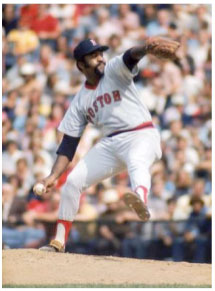
Blame it on our seeing "Field of Dreams" at too impressionable an age, but baseball movies featuring fathers and sons get us every time. And so it goes with "The Lost Son of Havana," a surprisingly effective doc about the displaced Cuban pitcher Luis Tiant that premiered Thursday at Tribeca. Jonathan Hock's documentary offers a deceptively simple premise: young Cuban pitcher comes to U.S. just after Cuban revolution, enjoys fruitful Major League career but can't return home to see his family until he (and a documentary crew) finagle spots on a baseball trip back nearly fifty years later, when much of said family is gone or much older. Tiant can be a little quiet and reflective as a subject; you don't know if he's too wise or too pained by life to say much, and sometimes it seems Hock should go deeper to get at his essence. But the moments Tiant reunites with his family are quietly powerful, genuinely heartfelt stuff in which he laments with relatives time lost and lives passed by. And they're juxtaposed kind of brilliantly with dramatic on-field scenes from Tiant's comeback-filled career. (An injury robbed the reticent, roly-poly, cigar- puffing hurler of his fastball at the tender age of 29, so he developed new pitching motions that enabled him to play another decade, including three 20-win seasons and two heart-stopping World Series shutouts with the Red Sox in the 1970's). Hock captures some great slice-of-life moments in Cuba -- a park where locals gather to argue about the best Cuban baseball players of all time, for example. And the film has one of the most memorable scenes in a recent doc not named "Man on Wire" -- George McGovern, on a trip to Cuba, convinces Fidel Castro to let Tiant's father (at one time a pitcher in the Negro Leagues who had fallen on hard times back in Cuba) make the trip from Cuba to the U.S.. Tiant Sr. eventually travels to Fenway and throws out the first pitch before a game his son starts, in a moment that's right up there with Costner's "Wanna have a catch, Dad?" at end of aforementioned sentiment-filled 80's baseball pic. "Lost Son of Havana" was exec produced by the Red Sox- worshipping Peter and Bobby Farrelly, who actually ended up down in Cuba playing a game to rationalize the trip to the Cuban government. Bobby Farrelly at the Q&A (where, incidentally, Larry David wandered in, by himself, slightly foggy, it seemed, but applauding vigorously to several comments made by the Farrellys and Tiant): "You saw these guys who play against us, who cleaned our clock, and we gave them our hats and our shoes and our gloves because they didn't have anything -- our team literally walked on the bus in our underwear -- and it was the most moving thing you could imagine, because they loved this game but they didn't even have gloves or bats to play it with." There's something wistful about the film, not just the shots of 70's baseball games on long summer evenings, but the whole pace of life Hock captures down in Cuba, hardships and all. ESPN just bought the movie for a summer airing. Outside of visting the ballpark, we couldn't imagine a better way to spend a sultry August evening.
April 24, 2009 -
"Simply an astonishing and beautiful piece of storytelling..." - Tim McGonagle/NewYorkology.com
April 28, 2009
Documentaries dominate Tribeca Film Festival
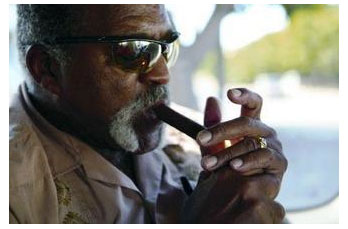
As I write for a website called NewYorkology I must reveal, in the interest of full disclosure, I'm originally from Boston and a diehard Red Sox fan. At the age of six my father took me to my first professional baseball game at Fenway Park. On the mound pitching for the Sox that day was a big man with a fierce stare and a giant bushy handlebar mustache. His windup looked exaggerated and bizarre as he released the ball from various arm slots. More importantly, the crazy junkball pitches he threw baffled hitters. The fans would chant his name "LOOOIE, LOOOIE!" as he struck out batters flailing at his pitches. He seemed bigger than life to my eyes in that summer of 1976. He wasn't just a pitcher; he was a Boston phenomenon that had people flocking to the ballpark. As baseball hall of fame writer Peter Gammons explained, "Luis Tiant was theatre unto himself."
With his thick Cuban accent, a cigar always in his mouth and a fantastic sense of humor, Tiant was an engaging character off the mound. But there was a side to him the fans never saw. Luis Tiant had not been home to his native Cuba since 1961.
The previous year he arrived in the United States as a promising young minor league prospect with the Cleveland Indians. Tiant was in the states playing in the minors when the Bay of Pigs invasion irked Castro enough to issue an ultimatum to all Cuban baseball players in the states: come home and play as amateurs, or never come home again. As their only child, his parents wanted him to pursue his dream and told him to stay in America knowing full well he may never see them again.
After a successful major league career, the 67 year-old Tiant finally gets a chance in 2007 to go home to his native Cuba from a 46 year exile. The Lost Son of Havana documents his trip back, what is left of his family and in his own words, "to see my country before I die. That's gonna complete my life." The trip back to Cuba is multi-layered with humor and heartache. His encounters with old neighbors and family are varied and fascinating. A few old friends have ambivalent feelings for Tiant. While happy for the reunions, Tiant becomes a catalyst for their anger and frustration that they couldn't leave Cuba as he did. They felt abandoned by him and the fact his letters and packages sent to them from the states were always confiscated by the Cuban government only exacerbated those feelings.
His two surviving aunts live in squalor, suffering for decades in Cuba's poverty, but are ecstatic to see him. They convey moving stories to Luis about his family during his exile, such as his mother seeing him pitch in the 1968 All-Star Game on a neighbor's TV. Watching that game or anything American was forbidden in Cuba, but the consequences of Cuban law and the weak signal didn't stop Tiant's mother. For the first time in seven years she saw her son - pitching in one of the biggest major league games of the year. His aunt told Luis his mother kept going up to the screen and touching his flickering image on the glass as tears streamed down her face. The many powerful examples of this gap between Tiant, his home and family serve only to draw the viewer into his tale.
While there are plenty of baseball stories and footage in the movie, they're relevant to the overall emotional arc and historical significance of Tiant's story. Baseball is simply the vehicle in which director Jonathan Hock captures the amazing historical depth that resonates in Tiant's life. From his father Luis "Lefty" Tiant, who was a dominating pitcher in the Negro Leagues during the 1930s and '40s to former Senator George McGovern hand delivering a letter to Fidel Castro in 1975 lobbying for Tiant's parents' release from Cuba, the Tiant saga is impressive.
Hock's documentary carefully studies Tiant's emotional conflicts of guilt and disconnect from his family and friends he left behind in impoverished Cuba. He wants to see his homeland and all its offerings, but he also deeply feels the disparity between his fortune and those he loved, left behind to suffer. Tiant tries to make sense of the complexities of his life, the hand he was dealt and the choices he made. Tiant's odyssey is long and riveting as he tries to relinquish some of the past and make peace with himself. The end result, The Lost Son of Havana, is simply an astonishing and beautiful piece of storytelling.
The story seems enormous in scope, but in fact is simply about people and the small but significant times where their lives intersect. In the beginning of the film, before his flight to Cuba, Tiant makes a stop in Miami. He pays a visit to a hilariously wise little old lady who was a close friend of his family back in Cuba years ago. They reminisce about the old times and then talk about the separation between their countries and family there — the meaning of it all. As both their eyes well with tears, the little old Cuban lady muses, "Oh my God, life is so big." As a kid (and maybe an adult too,) I always thought Luis Tiant was bigger than life. I now stand corrected. -
"Funny and Heartbreaking..." - Larry Dobrow/Maxim.com
At the Premiere: "Lost Son of Havana"
04/27/2009 by Larry Dobrow
The best baseball documentaries are the ones that are sort of about baseball, but not entirely — like The Life and Times of Hank Greenberg, as much about the anti-Semitism one of the game's nascent-era sluggers had to contend with, or Baseball: A Film By Ken Burns, which shows us the lengths to which Bob Costas will go to hear himself speak. Add to that list the alternately funny and heartbreaking Lost Son of Havana, a just-debuted film that chronicles the life of should-be Hall of Fame hurler Luis Tiant.
While the flick ably encapsulates the peaks and valleys of Tiant's career — he became a multi-pitch, multi-angle machine after his fastball deserted him — what makes it sing is the tenderness with which it sketches Tiant's return to his home country of Cuba after being away for 46 years. As a young kid playing summer ball in Mexico in 1961, Tiant was given a choice: come home now or don't come at all. Following the advice of his father — a Negro League pitching legend himself — Tiant stayed in North America and eventually played in the bigs for 19 years.
Upon arriving in Cuba with camera crew in tow, Tiant is visibly affected by what he sees, especially the squalor in which his relatives have long lived. The film doesn't ever morph into a political statement, however: it focuses on family and the human connections that can't be severed by time or circumstance. When Tiant finally tears up as he prepares to return to the United States — where, especially in and around Boston, he's received as a hero — your heart breaks for the years lost. The message, conveyed without obtrusive narration or melodramatic orchestral rumbles, seems to be that you can go home again.
Meanwhile, let's give ESPN some credit here for throwing its considerable weight behind Lost Son. The network recently bought the TV rights to the documentary and plans to air it this August, following a limited release in large-city theaters.
At the Lost Son premiere during the Tribeca Film Festival in New York City last Thursday night, the vibe was more spring training than hoity-toity film festival. Answering questions alongside executive producers Peter and Bobby Farrelly (yeah, the There's Something About Mary guys) and writer/director Jon Hock, Tiant seemed almost preternaturally at ease, despite the presence of a sizable red-carpet contingent (Matt Dillon, Chris Cooper, Larry David). Stockier but with the same hall-of-fame-caliber handlebar mustache encircling his mouth, Tiant feigned a reluctance to sign autographs ("I don't like to sign paper. Paper [is what] you flush down the toilet") and, in response to a question about the modern-day pitchers who most closely resemble him, noted the similarities between himself and Pedro Martinez. "Same attitude... I look at Pedro, I look at myself."
He did, however, acknowledge one possible downside of the film's release: "Maybe because of this movie, I may not be able to go back to Cuba again." His story doesn't need yet another layer of poignancy. -
"Fascinating!" - Tom Meek/The Boston Phoenix
Review: The Lost Son of Havana
A fascinating look inside Cuba
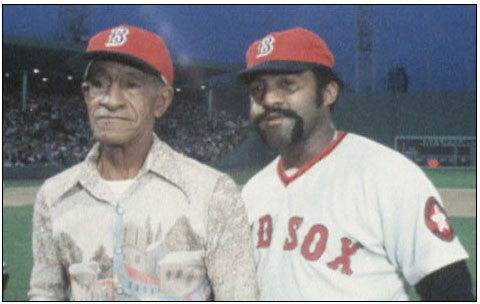
Red Sox legend Luis Tiant left his native Cuba for pro baseball in 1961 and hadn't been back in 46 years. Then some diplomatic finagling (it's illegal for US citizens to travel to Cuba) and a loophole in the Cuban amateur-league rules (director Jonathan Hock's documentary-film crew posed as a ball team and played the Cubans) landed him on his native soil. The return is bittersweet, with recollections of his mound triumphs eclipsed by memories of his parents and a reunion with indigent surviving relatives. The look inside Cuba fascinates, as does the account of Tiant's odyssey to the majors — his father played in the Negro leagues and on one occasion whiffed the mighty Babe. -
"An experience not to be missed" - Joel Bocko/Boston Indie Movie Examiner
The Lost Son of Havana
July 13, 2009 | Boston Indie Movie Examiner | Joel Bocko
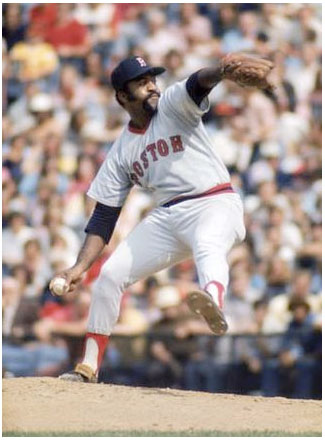
Thirty years after the chants of "Lou-eee, Lou-eee!" have faded from Fenway, six miles from the spot of a very important and long-awaited 1975 reunion, the National Amusements Showcase Cinemas in Revere screened The Lost Son of Havana in Theater 1 at 7:35 pm; one of four daily screenings for at least the remainder of the week (if it is not held over any longer). The name of the movie was left out of the "Now Playing" flyers adorning the lobby, and there weren't any placards emblazoned with large quotes from Entertainment Weekly or video installments running trailers in loops. When asked for a ticket to the film, one of the theater's employees warned, "You do know it's a documentary, right?" Apparently, this disclaimer was necessary: some customers have been complaining. No one complained on this particular night, though - the four other people in the near-empty theater seemed perfectly content with their choice of entertainment.
If you do know it's a documentary, and you don't mind, please go out and catch this moving and very enjoyable picture, which observes beloved Red Sox pitcher Luis Tiant's career, family life, and return trip to Cuba after 46 years in exile from the impoverished Communist island on which he was born and raised. Tiant's upright dignity is colored by a wry humor and pride, and also by a looming melancholy, and his charisma carries you along for the hour and forty-five minute running length. The filmmakers (director Jonathan Hock, backed by the Farrelly brothers, of all people) get out of their subject's way - the style is not flashy (though occasionally grainy film stock punctuates the video footage to represent Tiant's subjective impressions; it's a nice and subtle effect). The structure is the by now traditional call-and-response of the present (Tiant's visit to Cuba) and the past (his dogged up-and-down career in the majors); there is a narrator (the ever-dignified Chris Cooper) but he only steps in to introduce photos and footage from the 60s and 70s, tending to efface himself when the now elderly Tiant is onscreen.
Tiant is a man who has not had one athletic career, but several. First there are the years in Cuba, building up his skill, while his father - once a player in the American Negro leagues (the narration lyrically describes "seventeen summers on the backroads of America"), and a genuinely great one at that, considered by some a greater pitcher than Satchel Paige - hides in the bus roundabout across the street, watching his son play in the park despite his own disapproval of the boy's dreams. Then Tiant goes to the U.S. - and stays there when Cuba clamps down the door on ballplayers, insisting they either give up their dreams of a professional career and come home, or else abandon Cuba for a U.S. career. Tiant, with his parents' approval, chooses the latter path, and while this ensures all that is to come, to this day he seems to feel he must make excuses, and occasionally he voices mournful shame over what happened.
At any rate, success is by no means immediate. For a while he follows his father's path, playing across the Jim Crow South, and though civil rights breakthroughs were on the horizon, Tiant recalls the virulent racism of the time - another reminder that the trading-family-for-freedom narrative is not so simple as that. When he breaks in to the big leagues, he breaks in big time, pitching no-hitters, developing not one but two signature pitching styles, rising and falling between the majors and the minors, becoming a star, becoming a nobody, and becoming a star all over again...for those who are unfamiliar with the story, I will say no more, and let the movie work its magic on you. While many of Tiant's accomplishments would be at home in a feel-good sports flick, there are constant reminders that reality is messier: a powerful moment before the World Series followed by disappointment; ultimately, an inevitable fading from the scene despite comebacks; most importantly, a muted fatalism and sadness detected in Tiant's countenance.
All of this only makes the miracles that much more amazing, and the movie climaxes as Tiant's family life, the political relations of the U.S. and Cuba, and the baseball fortunes of the Red Sox converge in the autumn of '75, in a formulation that no fictional screenplay could get away with. Meanwhile, of course, the film cuts back to Tiant as a much older man, quietly surveying the baseball aficionados in Havana who, asked about the greatest Cuban exile ballplayer, come up with many other names before they remember his. His reunions and reconnections with old family and friends are emotional, but more in a quietly sad key than with a celebratory tone.
Early passages in the movie are informed by a firmly anti-Castro tone, a bit overbearing in Cooper's narration and in some of the bleak footage, but politics are neither the filmmakers' nor Tiant's concern; frustration and anger with the Castro regime's imprisonment of Cubans on their island (and in a decaying version of the past, a kind of national arrested development which foreigners seem to find romantic, but which many Cubans themselves appear frustrated by) give way to simple observation, with the emphasis on endurance and empathy, but in surprisingly uncloying ways. Repeatedly, the film eschews sentimentalism: though Tiant's family welcomes him with admiration and love, some old neighbors scold him with tears in their eyes for abandoning them - meanwhile, elderly aunts feebly remember the years lost and, in some sense, wasted, while younger cousins flat-out ask Tiant for money. Looking at their severely decayed surroundings, we do not wonder at it (and neither does he, providing the bills they require).
This is in keeping with the spirit of the man, whose determination is laced with regret, whose withheld feelings slip out from behind his reflective shades and can be glimpsed beneath his drooping gray mustache. In one scene, Tiant's narration informs us that he does not believe in an afterlife, even as the camera pans to a crucifix in his car; in this man's life, God exists to help one make it through, but there is no reward waiting on the other side. All that you have is what you make, what you've lost can never be regained, and yet one cannot linger over regrets for that very reason. That a few viewers have wandered out of the theater, apparently dismayed that they weren't seeing Transformers 2, is probably something Tiant could handle; he's been through much worse. The fact that his story is onscreen at all is triumph enough - and the experience is not to be missed. -
"Poignant, beautifully shot..."- Mike Miliard/The Boston Phoenix
Luis's Lost Years After five decades of exile, Red Sox great Luis Tiant journeys back to Cuba
By MIKE MILIARD | April 22, 2009
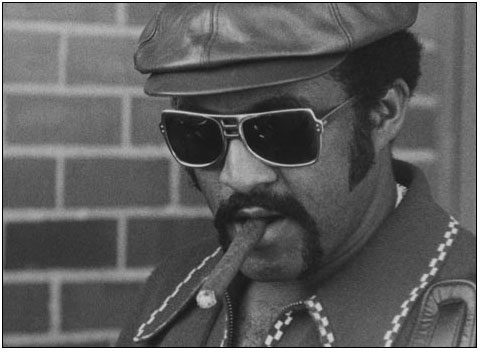
It had been nearly half a century since Luis Tiant stood on the Cuban soil where he was born, and where he first learned the skills that would see him become one of the greatest and most beloved pitchers in Red Sox history. But two years ago, even though he'd originally been denied a visitor's permit from both the Cuban and the US governments, he returned to the island for the first time in 46 years, as the coach of a goodwill baseball team.
There, he had joyous reunions with relatives he hadn't seen in many decades. But he also saw the rusting '56 Chevy Bel Airs and the crumbling colonial architecture. And he saw how those relatives struggle to survive on a few dollars a month.
"It was good and not good," Tiant tells the Phoenix in his thickly accented English. "You happy you come back, but you no happy with what you see. The deterioration of everything. The buildings, houses, streets. It was hard watching the way people lived. When I left, it wasn't that way. It's tough. You go down and you don't know what to do.
Cry? Or be happy because you go back to your country to see your family? It really disturb your mind."
His trip was documented by director Jonathan Hock, whose poignant, beautifully shot film The Lost Son of Havana (which was produced by the Farrelly Brothers and Kris Meyer), premieres this Saturday at the Somerville Theatre as part of Independent Film Festival Boston.
Tiant knew this would be an intensely emotional journey, and that many of the memories it dredged up would be wrenching. But he went nonetheless.
"I wanted to go and see," says the 68 year old. Otherwise, "I maybe die here before I get to go back."
Now, with Barack Obama in the White House and the headlines trumpeting a tentative thawing of US-Cuba relations — beginning with the announcement last week that the US will lift restrictions for Cuban-Americans wishing to travel and transfer money to the island — Tiant looks back on a life in which he's been exiled from his birthplace for five decades. In which he sent money home, only to have it confiscated. In which he was separated from his parents for 14 years. And he has one question: what took so long?
"I'm not a political person," says Tiant, sitting in a booth at Game On! near Fenway Park, looking sharp in a black leather jacket with a Bluetooth headset clipped to his ear and a giant 2004 World Series ring on his finger. His famous Fu Manchu is now cottony white. It's the second most expressive part of his face, after his empathic, amber-colored eyes.
Certainly, one can't picture the jovial, cigar-chomping Tiant speaking as provocatively as the Sox' Mike Lowell did back in 2006, when news reports revealed that Fidel Castro was gravely ill. "I hope he does die," said Lowell, whose parents fled the dictatorship for Puerto Rico in 1960. "Castro killed members of my family."
But if Tiant isn't especially "political," his life has been indelibly touched by politics.
By the time of the 1959 Cuban revolution, Tiant had begun to establish himself as a power-pitching phenom on the baseball-crazy island. Castro — himself a pitcher manqué— took note.
"I met him twice," says Tiant. "He used to come into the clubhouse. The last year we play in Cuba, in '61, he used to come and shake your hand."
That year, Tiant was splitting his time between playing in Cuba and the Mexican League. But in the wake of the Bay of Pigs, Castro consolidated power and locked down the island. Having abolished professional sports, he gave an ultimatum to any Cuban athlete playing abroad: return and play as an amateur or don't come home again.
And so what Tiant thought would be a three-month stint in Mexico turned into 46 years of exile. He swore he'd never go back as long as Castro was in power. But the years wore on and on. "It bother me a lot," he says. "I was the only child. My mom and dad no was young person. My father was maybe middle 50s. I thought I was never gonna see them again. It was hard, my first five years. Then, after a while, after I got my family, that made me happy in some ways: I got family to take care of now. I can't think too much or I'll go cuckoo."
Loooooeee!
The Cleveland Indians purchased Tiant's contract in 1961 for $35,000. After paying his dues in the minors, enduring segregation and racist taunts in the Jim Crow South — "they call you everything in the dictionary" — Tiant made his American professional debut in 1964.
Soon, he was dominating Major League Baseball. In 1966, he threw four straight shutouts. In 1968, he led the Majors with an obscene 1.60 ERA — the lowest in nearly 50 years — and nine shutouts. Add to that 21 wins and 264 strikeouts. Stat-wise, says famed sportswriter Peter Gammons in the film, it was "one of the five greatest seasons in the history of baseball."
But the next two seasons were marred by injuries. Cleveland gave up on him, trading Tiant to the Minnesota Twins, and soon after that he was demoted to the minors. His career looked to be all but over.
Enter the Red Sox, who took a flyer on him in 1971.
Responding to the change of scenery, Tiant completely reinvented his pitching mechanics, perfecting, in 1972, a baffling corkscrew delivery: a whirling dervish of a wind-up in which he contorted so completely that he wound up staring back at the Green Monster before uncoiling. He confounded batters with his blur of arms and legs, his three different release points, his ever-changing speeds.
It was utterly unique, and lethally effective. And it made him a folk hero, a racial unifier in busing-riven Boston. Start after start, the Fenway rafters rang out: Loooooeee!
Loooooeee!
"El Tiante," as he came to be known, posted another outstanding sub-two ERA in 1972. By 1975, when the Red Sox punched their ticket for that epochal World Series against the Big Red Machine, he flummoxed the National Leaguers with his herky-jerky motions, winning Games One and Four. In the latter, he threw an astounding 173 pitches. He struck out Babe Ruth!
Up until that time, Tiant's parents had remained sequestered in Cuba. The only glimpse they had of their son in seven years was when, in 1968, Tiant started the All-Star game and they were able to see him pitch on a fuzzy black-and-white television. "My mother bend down see my face in the TV screen," he says. "She would touch it."
But miraculously, after another seven years, when he was starting Game One of that World Series, his mother, Isabel, and his father, Luis Sr., were beaming, sitting in Fenway box seats.
Earlier that year, South Dakota senator George McGovern met with Castro in Havana. And he brought with him a letter from Massachusetts senator Edward Brooke, requesting assistance in a "matter of deep concern to myself and one of my constituents."
Tiant, Brooke wrote, was "hopeful that his parents will be able to visit . . . to see their son perform. . . . Such a reunion would be a significant indication that better understanding between our peoples is achievable."
Against all odds, Castro acceded. The Tiants could visit America. And they could stay as long as they wanted.
This was a favor no ordinary Cuban exile could have expected, of course. Not only was Castro aware of Tiant's numbers in the big leagues, he was also a fan of Tiant's father. "Lefty" Tiant, as his father was known, had played for the Negro Leagues' New York Cubans from the 1920s through the '40s. In one exhibition game, he struck out Babe Ruth. Some have opined he was a better pitcher than his son. But racism prevented him from reaching the Majors, and after his career, he returned to Cuba to work at a gas station.
Which is why it was vindication for Luis Jr. to build a dominant career in the major leagues and "do what my father never could do."
Want to tear up? Watch Tiant and his old man standing on the Fenway mound for the ceremonial first pitch, together for the first time in 14 years. Tiant holds his father's jacket, looking on proudly as the lanky septuagenarian winds up and unleashes a strike across the plate.
Having his parents finally see him pitch "made me feel good," says Tiant. "They were happy. I was proud." With them watching all through the 1976 season, he won 21 games.
But just 15 months after landing at Logan, his father died of cancer in a Boston hospital. Hours later, his wife followed him, suffering a burst aorta. A broken heart, some say.
Tiant buried both his parents on the same day.
I suffer too
"It's amazing how you got some program for 50 years, and it don't work," says Tiant of the US-Cuba policy that's remained virtually unchanged since 1961 as Castro, to the US's embarrassment, has survived.
"I don't understand that. We did it with everybody. Russia, China, all these countries around the world. Why we can't do it with Cuba? This no make sense to me. Open it for people to go down there. They can go see their family, American wanna go, they can go. Why not?"
"I understand there a lot of hard feeling," he continues. "I have hard feeling, too. I no see my father for 17 years. I suffer too. He not know my wife, or my kids, his grand kids. I got the luck, thank you God, to see them when I come here. But I lose 17 year of my family. To me, that's sad."
When Tiant did at last return to Havana, his family members reacted with mixed emotions: many were happy to at last see him, and yet unhappy that he hadn't returned sooner. "You were going to come in '91 and 2004," says one aunt in the film. Tiant's old compatriots acted much the same, achingly cognizant of their very different lots in life.
In one of the film's most powerful scenes, Tiant is approached by a former youth-league teammate. He's resentful of the career Tiant was able to make for himself: "I was mad at you. I'll tell it to you straight. Damn, Luisito, I'm pissed as hell!"
The man's neighbor gestures at his surroundings, speaking to Tiant with barely concealed pique. "Well, you see how we live here. Humbly. Struggling and working."
Tiant stands silently and listens.
"How you live with six dollars a month?", Tiant later asks me. "You gotta be kidding! But they survive. I don't know how many people can take that kind of life. But they been fighting." (It's difficult to watch his relatives' gratitude for the humble offerings he pulls from his suitcase in the film — thread, soap, toothpaste.)
Tiant knows how lucky he is to have built the life he has. He settled in the Boston area in 2001, and is now employed as an instructor for the Red Sox. A few years ago, he launched his own line of El Tiante Cigars. Occasionally, he hawks Cuban sandwiches from the El Tiante stand on Yawkey Way. Always, people stop to shake his hand. "I been happy," he says. "The best thing that happen to me is coming here."
But he still thinks often of home. And if he's heartened by these cautious recent policy changes — "at least that's a start" — he still can't shake the regret of all that lost time.
"It's sad," says Tiant. "All those years were wasted. They do what they try to do now. But why wait so long?" -
"An autumnal portrait of a hero haunted by loss and regret..." - Bill Weber/Slant Magazine
TRIBECA FILM FESTIVAL: THE LOST SON OF HAVANA
By Bill Weber | 04/26/2009
"Years is easy to say, but those are days and nights," offers an anguished Luis Tiant, famed major-league pitcher of the 1960s and '70s, returning to his boyhood streets and playing fields after a 46-year absence in The Lost Son of Havana, an autumnal portrait of a hero haunted by loss and regret. Leaving home for a three-month ball-playing stint in America at age 20 in 1961, right after the Bay of Pigs, Tiant found himself trapped by the severance of diplomatic relations, and was urged in a letter from his father—himself a former star hurler of the Cuban, Mexican, and American Negro Leagues—not to return, but to seek his professional destiny in the States. After breaking in as an All-Star flamethrower with the Cleveland Indians, Luisito came back from a freakish shoulder fracture by reinventing himself as a crafty artisan—featuring a funky windup where his head turned to centerfield, then bobbed skyward—for the Red Sox, prompting hordes of Bostonians to ritually chant his name. In a storybook climax to his family's baseball journey, Tiant's elderly parents were permitted by Castro to join their son in 1975, where they witnessed his stirring performance in the World Series.
From his sobbing embrace by elderly aunts he hadn't seen in a half-century to somber musings that "it all could have been different," El Tiante's narrative is a ready-made tearjerker, and director Jonathan Hock not only wrings them out of the poignant reunion tale, but the nearly simultaneous deaths of both of Tiant's parents the year after their unlikely furlough from Cuba ("They killed me," mourns the son). Still, the man's cigar-chomping bonhomie that so well served his mainland media profile remains magnetic, and he's authentically bemused by his "lost" status in 21st-century Havana, as when baseball aficionados in mid-debate, prompted to name the greatest native pitcher, toss out the names El Duque and Jose Contreras. As for the politics of exile, the documentary doesn't delve into ideology or advocacy beyond capturing the undertow of the poverty in his Cuban Tiant family that gnaws at their celebrated prince. "We are barely scraping by," a cousin declares frankly to Luis just before he departs the island once again, and when he peels off some U.S. bills to meet her discreet but unadorned plea, it's both the only thing he can do and, in his own mind, not nearly enough. -
"Compelling..."- Joe Bendel/The Epoch Times
Foreign Film Highlights at the Tribeca Film Festival
By Joe Bendel
Apr 23, 2009

Whether you like comedies, dramas, thrillers, or documentaries, the Tribeca Film Festival affords movie fans the unique opportunity to screen films in the company of the director and actors responsible for the work on screen.
In the spirit of the multicultural city of New York itself, this year's festival features films from 36 countries. The following are reviews of four buzz-worthy foreign films gracing the festival.
Cuban Documentary: 'The Lost Son of Havana'
The Lost Son of Havana follows retired major league baseball player Luis Tiant as he returns to Cuba for the first time in nearly 50 years.
Luis Tiant can do the impossible—he can get fans of both the New York Yankees and Boston Red Sox to agree on something. While loved and respected by Yankee fans for his two years in pinstripes, Tiant's glory years were undeniably spent pitching for the Bosox.
During his Boston stint, Tiant did everything humanly possible to end their World Series frustrations. Yet more painful for Tiant than the team's championship drought was his 46-year exile from his native Cuba. His storied career and dramatic homecoming are now documented in Jonathan Hock's The Lost Son of Havana.
Baseball is a national obsession in Cuba, and it was the Tiant family business. At one time, Luis "Lefty" Tiant Sr. had been a star pitcher for the Negro League's New York Cubans and the Cuban professional league, but his eventual obscurity left him temporarily disillusioned with the game.
Then he witnessed his son's raw talent. Unfortunately, Tiant Jr. got called to the Major Leagues just as Castro closed his iron fist around the island nation, resulting in the pitcher's long separation from friends and family.
To Hock's credit, he seems to harbor no illusions about the nature of Castro's regime. After all, he and Tiant had a difficult time getting the authorities to authorize their entry permits. They were traveling under the auspices of an American amateur baseball team playing a "goodwill" game with their Cuban counterparts.
As a condition of approval, the small crew of Lost was required to play in the match, essentially guaranteeing a lop-sided American loss, which they note, may well have been the point. Though the political situation is largely unaddressed, a corner of a Havana park dedicated to animated baseball discussions is tellingly described as the probably the only place where free speech exists in Cuba.
In between scenes of Tiant's tearful reunions with loved ones, Hock details the highlights of his eventful years in the Majors. While showing early promise, an arm injury nearly ended his career. However, the dominating fastball thrower was able to reinvent himself as a crafty pitcher, much as his father was. Time and again, Tiant was written off, but he kept clawing his way back into the league.
His is a career with many highlights, but baseball analyst Peter Gammons convincingly argues Tiant's game-four victory in the 1975 World Series was his finest moment, won on pure guts alone. To use a sports cliché (and this is certainly the time for it), as a player, Tiant had heart.
Lost is a well-crafted documentary, featuring a peppy, Cuban-inspired soundtrack by Robert Miller. The talking-head segments are a cut above average, featuring warm reminiscences by Carl Yastrzemski and Carlton Fisk that Boston fans should particularly enjoy. It also has some big names attached to it, including its producers, the Farrelly Brothers of "There's Something About Mary" fame, and narrator Chris Cooper.
Tiant is star though, and he always seems quite likable and engaging throughout the film. It is a compelling story that should have broader appeal than most sports-related documentaries. It premieres on Thursday, April 23, and screens again on April 27, April 30, and May 2. -
"LOST SON is a great movie... the Farrellys delivered the goods!" - Jerry Thornton/Barstool Sports.com
Movie Review: "Lost Son of Havana"
By Jerry Thornton
No list of Most Beloved Boston Athletes of All Time is worth the toner it's printed with if it doesn't include Luis Tiant in the Top 5. At his best Looie was as good as Pedro, as clutch as Schilling and Beckett and as charismatic as… well, himself. He defied comparison. No less an authority than Peter Gammons says Tiant is his favorite ballplayer, ever. And apparently he's not the only one who feels that way because in case you missed it, the Farrelly Brothers made a movie about Tiant that premiers this weekend. The movie is called "The Lost Son of Havana," it was produced by Kris Meyer who's a South Shore guy and a few weeks ago I got a private screening of it along with El Tiante himself, because working for the world's fastest growing media juggernaut is not without its privileges.
"Havana" is actually three or four different stories all rolled together into one high-quality Cuban cigar of a movie. Mainly it's about Looie's first trip back to Cuba since he defected as a 20 year old phenom in 1961. But it also tells the story of how he grew up the son of one of Cuba's national baseball heroes but had to leave his family behind for the chance to play baseball in the US. And "Lost Son" is the best account of his baseball career I've ever seen. The scenes from the mid-70s when Tiant's mom and dad got special permission to come live in Boston with their son… then watch in person while he becomes a folk hero in the ‘75 World Series… are like video pepper spray.
The Cuba scenes avoid politics, but in Cuba the politics are everywhere. Believe me nothing will make you hold on tight to your freedom faster than seeing what a country with complete government control over your life looks like. The streets of Havana are frozen in time, indistinguishable from "Godfather II." The people Tiant meet live in deprivation. One of his aunts sums it up the way only an old lady who's been through the ringer can. "Life is so big" she says. But there are funny parts throughout. Tiant meets another aunt he hasn't spoken to in 40+ years and within .5 seconds she starts kvetching about how her back is bothering her and how she hasn't been sleeping and you realize that old people squawking about their health is the universal language. Or the part when Tiant visits the park where Cuban guys stand around all day arguing baseball and it hit me that these could be my friends except they're speaking Spanish and they're not drunk.
The baseball footage is flat out incredible. Tiant starting the 1968 All Star Game when he was with Cleveland. His disasterous shoulder injury that should've ended his career until he finally re-invented himself from power pitcher to a human Swiss army knife of pitches, moves and deliveries. And the highlights of his games against the Reds, including his 170 pitch complete game epic are worth the time out of your life all by themselves. But there's a great story here as well. If you're old enough to remember El Tiante, you know what I mean. If you're not, you missed out. Either way the Farrellys delivered the goods and "Lost Son" is a great movie about a guy who's life is so big. -
"Eloquent..."- Rick Warner/Bloomberg.com
Red Sox Hero Tiant Returns to Native Cuba After 46-Year Exile Interview by Rick Warner
April 28 (Bloomberg) -- When Luis Tiant left Cuba in 1961 to play summer baseball in Mexico, he expected to be gone for three months. He didn't return for 46 years.
Tiant's long exile and emotional homecoming are the centerpiece of "The Lost Son of Havana," an eloquent documentary that's now playing at New York's Tribeca Film Festival and will air in August on ESPN. The film was produced by Bobby and Peter Farrelly, the brothers who made the comedy blockbuster "There's Something About Mary."
Nicknamed "El Tiante," the former All-Star pitcher was best known for his twisting windup, Fu Manchu mustache, stubby cigars and sterling performance for the Boston Red Sox in the 1975 World Series. Tiant won two games against the Cincinnati Reds and had a no-decision in the legendary Game 6, which Boston won in the 12th inning on Carlton Fisk's home run.
Until now, though, few people knew about his painful separation from family and friends. Barred from his native land for almost half a century because of political conflict and travel restrictions, Tiant finally was allowed to return in 2007 with an amateur baseball team.
"I wanted to go back before I die," Tiant, 68, said in a phone interview from his home near Boston. "Forty-six years is a long time to be away."
Gum, Toothpaste
Director Jonathan Hock and his small film crew followed Tiant on his weeklong trip to Cuba, where he visited two elderly aunts, old family friends and his childhood home. He was welcomed back with open arms.
"I didn't know what to expect," he said. "So many people I knew are gone now. Sometimes I want to laugh, sometimes I want to cry, sometimes I want to scream."
Tiant, whose father was a great Cuban pitcher in the U.S. Negro Leagues, was saddened by the poverty he saw in his homeland. He brought gifts of chewing gum, toothpaste, candy, lotion and clothes for his relatives, who told him of their daily struggles to survive.
"It's hard to understand the suffering, living only 90 miles from the U.S.," Tiant said. "Life is very hard there."
Old Cars
Havana today looks like it's stuck in a time warp with its 1950s vintage cars, rundown buildings and outdated TVs and radios. To accentuate that old-fashioned aura, cinematographer Alastair Christopher used an 8-millimeter camera to film scenes around the city.
"It gives you the feeling of those old home movies," Hock said at a party to celebrate the Tribeca premiere. "When you intercut that footage with the more modern-looking video, it feels like you're caught between two eras, which is what Cuba is like."
Tiant was pitching in Mexico in 1961 when the U.S. backed the failed invasion at the Bay of Pigs, leading Fidel Castro to crack down on foreign travel. If Tiant had returned to Cuba then, he knew he'd never be allowed to go to the U.S. and pitch in the major leagues. If he didn't return, he might never be allowed to come home.
Still, his parents encouraged their only child to pursue his dream.
"They knew they might never see me again, but they wanted me to take advantage of the opportunity," Tiant said.
McGovern's Help
Tiant made his major-league debut with Cleveland in 1964 and had three 20-win seasons before reaching his only World Series in 1975. Thanks to a personal request by Senator George McGovern, Castro allowed Tiant's parents to move to the U.S. and watch their son pitch in the Series.
"That was the happiest time of my life," Tiant said. "To have them here and see my success made it all worthwhile."
Tiant's reunion with his parents lasted only 15 months: His father and mother died on consecutive days in 1976. Tiant continued to pitch in the majors until 1982 and remains involved in baseball as a spring-training instructor for the Red Sox. He also has his own line of handmade "El Tiante" cigars, made by a Massachusetts-based company run by his son Danny.
As for Cuba, Tiant supports President Barack Obama's easing of travel restrictions. He would also like the president to lift the U.S. trade embargo with Cuba, which has been in effect since 1962.
"I don't care about politics, but when you do something for 50 years and it doesn't work, you should try something else," Tiant said.
-
Director Jonathan Hock on NPR's All Things Considered
The Long Road Home For A Cuban Baseball Legend
Listen to the Story
April 22, 2009
The new documentary The Lost Son of Havana tells the story of baseball legend Luis Tiant and his return to Cuba after 46 years.
Tiant was an old man, long retired from baseball, when he finally returned to his native country. Filmmaker Jonathan Hock came with him on the trip.
"He had an extraordinary need to see his family and find out if it was OK with them that he'd never come home, knowing how much they had suffered in the 46 years that he had been gone," Hock tells NPR's Robert Siegel.
A Self-Imposed Exile
Tiant had been pitching for the Mexican baseball league during the Bay of Pigs invasion. He had recently married and was planning to go back to Cuba for his honeymoon.
But his father sent him a letter saying "don't come home," explaining that there was no longer professional baseball in Cuba and that the new communist government under Fidel Castro wasn't letting anyone leave the island, Hock says.
Tiant's father told him to "give it a little time, it'll blow over and come home for your honeymoon then," Hock says.
Tiant stayed in Mexico and then went on to huge success in Major League Baseball in the United States. He pitched for several teams in his 18-year career, most notably the Boston Red Sox.
"None of them expected that it would be 46 years before Luis went home," Hock says. Tiant and his parents were reunited in the United States, but the rest of his family stayed in Cuba.
Hock says it would have been easy for Tiant to settle into life as a retired New England baseball legend, going to Fenway Park every once in a while. But Cuba pulled at him, especially the family members he had left behind.
"He needed to settle his score back home before he checked out," Hock says.
A Favorite Son Returns
The first person Tiant met in Cuba was Juan Carlos Oliva, the brother of Tony Oliva, another baseball player who had left Cuba for fame and fortune in the United States. Juan Carlos Oliva broke down in tears when talking about his brother leaving the family.
"It had broken the family's heart," Hock says.
But Oliva's family also rejoiced at Tony's success. Hock says meeting Oliva's brother and seeing his family's pain and joy prepared Tiant to meet his own family.
The film includes a touching but sobering scene at a party where Tiant meets some of his extended family. He is rich and they are poor. They soon ask him for help — in cash.
"This was one of the most uncomfortable scenes I've ever filmed. But you have to shut off your emotions and keep the camera rolling," Hock says. As Tiant is getting ready to go, his cousin takes him aside and explains that life isn't easy, they are living on cigarettes and they need more money than the government gives them.
Tiant reaches into his pocket and gives her all the Cuban money he has.
Some of Hock's filmmaker friends who looked at the rough cut of the film said he should take the scene out because it was difficult to watch. But Hock decided to keep it in: "This Cuban-American thing is very complicated. I don't think Luis was ashamed to do it; I don't think his cousin was ashamed to ask."
The moment illustrates the central tension of the story: by leaving Cuba and his family, Tiant found huge success. His family did not.
"He's been running from it his whole life," Hock says.
Returning to Cuba brings Tiant a measure of peace. "I feel better," he says in the film. "My heart is better; my head is better. I guess I can close my book now. If I die, I die happy." -
Interview with Jonathan Hock from USA Today
Documentary details Luis Tiant's return to Cuba
By Reid Cherner & Tom Weir
Luis Tiant lived the life you make movies about and Jonathan Hock has done just that.
A 20-year-old Tiant left Cuba on a trip scheduled to last a month. Forty-six years later he would finally make it back to the island.
In between, that almost half-century he would become a U.S. citizen, raise a family, play 19 seasons and win 229 games in the Major Leagues and see Fidel Castro make an exception to allow his parents, decades later, to join him to be reunited in the U.S. (Photo courtesy of 5-Hole Productions)
Hock, who wrote and directed The Lost Son of Havana talked to Game On! about following Tiant on his return to Cuba. The movie debuted at the Tribeca Film Festival and will be shown on ESPN in August.
Tell us about the movie.
It is a melancholy story and a story about coming to terms with 46 lost years. The more Luis succeeded in the Major Leagues the greater the sense of loss of over what he couldn't share with his family back in Cuba, with his countrymen back in Cuba. For every triumph there was sadness for him and until he made this trip that score was unsettled. He needed to settle that.
Did the movie turn out how you expected?
What we encountered in Cuba was beyond what we had expected in terms of the physical, economic and social state of the island. When you witness it with your own eyes, and hopefully the cameras captured this, and you meet the people and the state of deprivation they have been living in is really striking and upsetting when you are that close to it. On the other hand, the camaraderie and the openness and the friendliness and the positive spirit of the people, to experience that first hand, was something I was not expecting.
Not since Groucho has anyone used a cigar and a mustache to such great effect.
We loved the cigar. It is really a symbol of Luis' connection to his homeland. It is very symbolic of the island and we did accentuate that. The cigar was always there and we did try to bring your attention to it every now and then. Luis' story speaks in a large measure to the whole Cuban-American conflict and the whole Cuban personality that we experienced here in American for the past 50 years. The cigar has always been a prop that Castro has always used, I think it was great to sort of take it back from Castro and give it back to the people.
Tiant's father was one of Cuba's greatest pitchers was he not?
The emotional power, the thrall that Luis's father still has over people on the island is something was not something we expected from the history books. We had a photograph of Luis's father and every time we showed it to somebody they cried. Luis, having risen out of his shadow to even greater heights, is a really interesting phenomenon. Wanting to share his dream with his father, and not being able to for so long, and then being able to that is the core of the emotion of the story I think. The Cuban people have this gift of expression to be able to fully be present in their sadness and their joy at the same time and it makes for a very powerful scenes.
When Tiant is flying into Cuba there is no voice-over or conversation. Was that planned?
The decision made in the cutting room. When we saw that footage and saw that look in Luis's eyes, straining to get his first look at the island in 46 years. There were no words that were necessary. You are looking at a picture that expresses everything.
Would you say this is a happy or a sad movie?
It is both. Not one or the other. That is the incredible thing about the Cuban people. And that is the great lesson and the great gift that Luis's family in Havana, as poor as they are, as deprived as they are, that was the gift they gave to Luis, the understanding that life is sad. We can't deny that but we don't have to let that stop us from smiling and be glad for what we do have. Maybe the most important line that Luis speaks in the movie, as he's getting ready to leave his family he says to them "let's see if we can't help each other." What they have to give him is perspective in life. You don't have to dwell in the sadness, you can have peace with the sad parts of your life and the things that you've lost. You can't turn back the clock and get those lost years back. What he can have is the knowledge that everybody there still loves him and that from this point forward they can maintain the connection that he re-established with them and the joy in that going forward is no less for the sadness and the sadness in the past is no less for the joy going forward. You have two pockets in life, one for the joy and one for the sadness. You carry them both with dignity. That is Luis's message.
Would you describe this as a sports movie?
It is a story of human being an artist. His art happened to be pitching. And you can't avoid that, you want to showcase that but the movie is about him as a human being not him as an athlete. I try hard to focus hard on the human being as opposed to the field the human being happens to work in. This movie could have been about a painter, a chess player, a flutist. It happens to be about a baseball player. It is a political film, a family drama, a sports film, all those things rolled into one.
What does a sports fan get out of this movie?
For the sports fan like me, who grew up playing waffle ball and trying to do the Tiant windup, I hope that the film conjures up those memories and gives insight that you never would have had of why he was so extraordinary. It is nostalgic but it goes beyond that. It should elevate your appreciation of him to new heights.
And the non-sports fan?
I think as the saga of a Cuban-American family it tells such a powerful story. That is the magic that this guy has. To see him start the movie in such a state of loss over the past and so unsettled about the path his life has taken and then to watch him settle that score on the island where he was born and raised I think that really is uplifting. There is sadness and joy hand and hand but ultimately he says himself "today I am a free man" and he had never said that in the 46 years since he had left Cuba. He had to go back to Cuba to reclaim his freedom and he got it and you have to be happy for that.
-
-
The Best That Never Was (2010)
-
The Cooler

Unbreakable: The Best That Never Was
By Jason Bellamy
In trying to recount the skill of running back Marcus Dupree, no one minces words. One of his high school teammates says Dupree was "awesome" and could score whenever he wanted, "literally." A Mississippi newspaper reporter says that watching Dupree running through and around his prep peers was like watching NFL great Jim Brown taking on teenagers. Oklahoma University legend Barry Switzer says that Dupree was the "most gifted player" he ever coached, "bar none." And Lucious Selmon, who recruited Dupree to Oklahoma, says Dupree was the best athlete he ever saw and had the talent to be the best running back of all time. But of all the effusive assessments we encounter in Jonathan Hock's documentary The Best That Never Was, the latest edition in ESPN Films' "30 for 30" series, perhaps the most accurate one is provided by one of Dupree's childhood friends, who matter-of-factly says, "We suspected he could do anything he wanted to do." Wrapped up in that seemingly simple statement is the measure of Dupree's enormous abilities and, ironically, the making of his downfall.
Marcus Dupree's mixed blessing was that everyone who watched him play came away convinced that he was without limits. That's why Dupree had his pick of any college in the country when he graduated from his high school in Philadelphia, Mississippi, and it's also why Dupree's college football career almost immediately became defined by all he didn't do and everything he didn't have. When Dupree set a still-standing Fiesta Bowl record by rushing for 239 yards (on just 17 carries!) in Oklahoma's losing effort to Arizona State, Switzer didn't praise his freshman running back, he threw him under the bus, reasoning that if Dupree had been in better shape he could have doubled his carries and doubled his yards and, in doing so, led the Sooners to victory. Dupree had been record-setting great and somehow not great enough. Not for Switzer, anyway, who was so determined to avoid giving Dupree anything he hadn't earned that he went out of his way not to recognize the dominance that came to Depree so naturally. So it was that Dupree began wondering why the program that was so desperate to sign him in the first place withheld not just praise but also the (illegal) perks that other Sooners players were rumored to be enjoying. Influenced by family and friends who assumed that the football player who could do whatever he wanted on the field should get anything he wanted off of it, Dupree, too, started to judge his college experience according to oversized expectations. And so it came to be that instead of winning a Heisman trophy or leading Oklahoma to a national title, Dupree dropped out of Oklahoma before the end of his sophomore season. A lucrative contract with the USFL soon followed and, alas, just as quickly a devastating knee injury followed that. At the age of 20, Dupree's football career was pronounced over.
Hock revives Dupree's impressive and too brief athletic career with clarity and balance, effortlessly blending talking head interviews, archival footage and shots of Dupree revisiting his Philadelphia roots. But The Best That Never Was ranks among the upper echelon of "30 for 30" films not because it reminds us of a player that time has forgot but because it delicately demonstrates how Dupree the person was forgotten within his prime. Here's a guy who was so sought after coming out of high school that college assistants hunkered down for the long haul in Mississippi hotels while other recruiters bribed Dupree's teammates with gifts, trying to buy their influence. So intense was the contest for Dupree's services that Willie Morris wrote a book about it: The Courting of Marcus Dupree. Yet once Dupree became a Sooner, the overwhelming interest that had been paid to him as a senior was gone. No one seemed to realize how unhappy he was, and if so, no one was concerned enough to do anything about it. Dupree was a teenager being treated like a professional, not because he was that mature but because he was that skilled, as if one correlates to the other. Hock allows us to spot this failure without aggressively pointing fingers. To watch this film is to be appalled by what we take for granted: recruiters spending heaps of money in an effort to land players who come from next to nothing; players being asked to live up to their impossible reputations, or else; athletes being coerced by advisors who greedily or foolishly assume that the dominance of an athlete at 18 is a guarantee of what's to come even two years later. No wonder Dupree felt "burned out" by his sophomore year. He was being handled according to an image of his unrealized endless potential, rather than according to what he was: still just a kid.
So if I tell you that in his brief USFL career Dupree was taken advantage of by a trusted advisor who "invested" his salary in such a way that Dupree's eventual legal fees eradicated his earnings, or that after his playing days Dupree's effort to find employment required him to seek out a former Mississippi police officer who had served jail time for his role in the notorious murder of three political activists in 1964, or that now Dupree works as a truck driver, you might suspect that The Best That Never Was is a depressing film. But it isn't. Because as it turns out, the same guy who failed to achieve the long and unrivaled professional football career that everyone thought was inevitable managed to rehabilitate himself en route to a short and pedestrian professional career that, after his knee injury, even Dupree thought was impossible. All these years later, in a position that would make so many of us feel defined by missed opportunities for glory and material wealth, Dupree stands tall, proud of all that he did achieve – both in his first short career, when everything came easily, and in his even shorter comeback stint with the Los Angeles Rams when Dupree truly earned every carry and every yard through incredible effort.
Dupree's story compels because it is both unique and universal. No one followed quite the same path, yet so many athletes are stars one moment only to be forgotten the next. As Dupree looks through the dusty trophies on the mantle in his mother's home, or watches clips his high school highlights, we see not bitterness but joy – a contentment that comes from knowing that he did many things no one else ever could, even if he didn't do them for as long as people expected. Hock winds down his film with a parade of talking heads making wistful comments about all that Dupree could have been, but they reminisce without seeing all that Dupree is today. As foolish as it would be to ignore the tragedy of Dupree's football career – from his lack of a strong mentor to all that unrealized promise – it would also be a mistake overlook the beauty of Dupree's indomitable spirit almost 30 years later. When people watched Dupree play football in his prime, they saw a man who couldn't be brought down. Apparently they were right.
The Best That Never Was premieres tonight on ESPN at 8 pm ET, and will rerun frequently thereafter. The Cooler will be reviewing each film in the "30 for 30" series upon its release. -
Pop Matters

30 for 30: The Best That Never Was
By Cynthia Fuchs
So Much More to Play
"He didn't look like he was hustling because he was so smooth," says Leon Baxtrum. "This was a young man that was unbelievable in just about every sense of the word." The Youth League coach is remembering Marcus Dupree, whose startling speed on the football field left most everyone who saw him dumbfounded. "I just remember looking at the field and seeing 21 high school football players and Jim Brown," says Billy Watkins, a reporter for the Meridian Star. "I had never seen anybody that big running that fast. It was indescribable." Now, as he first appears in The Best That Never Was, Dupree walks. Making his way through a muddy truck-yard, he climbs into a bulldozer and sets to work.
Airing this week in ESPN's 30 for 30 series, Jonathan Hock's compelling documentary charts Dupree's trajectory from prodigiously talented high school running back to part-time truck driver. It's a story of expectation and brilliance, disappointment and misfortune. It's also a story of youthful energies misdirected and self-interested adults, of history and hope.
Dupree was born in Philadelphia, Mississippi in 1964, just three weeks before James Chaney, Andrew Goodman, and Michael Schwerner were murdered. For most of Marcus' life, notes the Neshoba Democrat‘s Sid Salter, "The whole county, the whole town, to a degree the whole state, bore the stain of what happened." Dupree, the film notes early on, earned the respect, and even the awe, of everyone who saw him play, including the deputy sheriff linked to the murders, Cecil Ray Price (in 1967, despite the state's best efforts not to bring charges in the case, he was convicted of violating their civil rights). "Daddy thought the world of Marcus," says Cecil Jr. Under a local newspaper headline, "Philadelphia Story: City once torn by racism unites behind black," the son recalls his own experience with his classmate, following the integration of Mississippi schools in 1970: "He would come to my house I would go to his house."
With this story and some footage of Martin Luther King Jr. (hoping that, "From the blood of those young men, our whole nation would be redeemed, that we would rise to higher heights of brotherhood and understanding"), The Best That Never Was sets a broad frame for Marcus Dupree's experience: he was never just a gifted kid. He was always carrying too many ambitions and dreams—for his family, his teammates and coaches, and a community in search of redemption.
At first, he appears so astoundingly gifted that you can see why so many people around him invested so much. Scratchy black-and-white footage of Dupree's high school games confirm what witnesses say: it does look "like everybody else was standing still and he was the only one running." His runs are so inspired and inspiring that you can see why Watkins sounds nearly rapturous: "I remember going back to the paper and thinking, ‘I have to tell them, I have to tell my readers what they have here, what they have an opportunity to see.'" Watching the film, you do feel lucky to see Dupree, and can only imagine what it must have been like to see him in person.
All that said and even if you don't know the story, the film's title indicates where Dupree is headed. Recruited by what he remembers as hundreds of colleges, he's swayed by bad advice and the sorts of "incentives" that used to be offered without much compunction. As Watkins puts it, "Players were being bought, players were being given things, it was dirty." The film includes interviews with recruiters and coaches who remember their determination to sign Dupree, how some moved to Philadelphia for months, offered cash and cars and housing for his mother Cella and younger brother Reggie (the film notes as well that Reggie suffered from cerebral palsy, which Dupree cites as a possible reason for his exceptional efforts, because "He couldn't play and run like I could run").
When, after months of back-and-forthing over where to go, he finally signs with the University of Oklahoma, Dupree is almost immediately disappointed once he arrives in Norman. Or, at least this is the story told by one of his advisors, Reverend Ken Fairley, who had been pushing him to go to the University of Southern Mississippi. While the film suggests Fairley has his own interests in Dupree's career (and indeed, he ends up with some unspecified sort of control over Dupree's money once he signs with the USFL's New Orleans Breakers in 1984), it also makes clear that none of the adults in the process was looking out for Dupree per se. He had an Uncle Curlee who pressed for one decision or another (and whom Salter describes as "shadowy"), and a coach at Oklahoma, Barry Switzer, who's introduced in his trophy room in Norman. The camera pans over prizes and awards as he notes of the team's 1985 national championship, "Marcus would have been on that team."
But he wasn't. As the film goes on to tell, Marcus was unhappy with the coaching at Oklahoma ("He wanted to move me to tight end, you know, I'm the number one running back in the country") and Switzer now says he had something like a protocol. Even though, he says, "Within the first week of practice, we know he's he best player we've got," Switzer says he decided not to use him because other players had been waiting to "get in the huddle."
This makes sense for a college team, of course, but Dupree was 19 years old, and mystified by the coaches' decisions. The documentary doesn't explain exactly how the relationships went wrong, as each interview subject has his own version of events, but the upshot is that this astonishing player was not playing, and when the team did change its offense (from a wishbone to an I formation), Dupree was again remarkable. "In every game he was busting a long run," remembers radio reporter Mick Cornett, ""A freshman putting together run after run after run. He immediately became the most popular person in Oklahoma outside of his head coach." Again, footage of Dupree—this time in color—reveals how astounding he was, and why people who saw him were so moved.
Football, as everyone knows, is a brutal game. And it is at least partly premised on luck, as this can ordain which players play, which adults counsel them, where they play and how healthy they are or stay. The Best That Never Was leaves a lot of its story off-screen, focused less on who might be responsible for what or how Marcus ended up at any particular step of his journey, than on his brilliance, however short-lived. He's injured more than once, he's confused, and he's prone to accept less than helpful recommendations. As Switzer sums up, "There was so much more to play and so much more to see we didn't get to." The question the film asks is most pertinent: who made up this "we" and where were they when Marcus Dupree needed them? -
The Daily Beast

The Greatest Football Player That Never Was
by Buzz Bissinger Marcus Dupree was pegged to win three Heismans before he got chewed up in the college system. How did the high-school sensation make peace with life after football? Buzz Bissinger reports.
Marcus Dupree watched the Super Bowl last Sunday in the place where he grew up, the town of Philadelphia, Mississippi. If there was anyone in the history of football who I thought would be glued to the television, playing the athlete's lament of could-have-should-have, it would have been him.
 Marcus Dupree, 1982. Credit: Newscom
Because it should have been him. But it wasn't. Because of the college meat grinder that mangles so many players. Because of too much attention for a simple homespun kid whose world revolved around his mother and grandmother and younger brother Reggie, born with cerebral palsy. Because of the pressure of becoming, at 17, the black and white hope who would finally heal the gaping racism of a town in which three young civil-rights workers had been murdered in 1964. Because of recruiters for the University of Oklahoma and the University of Texas who moved into a motel in Philadelphia for weeks to gain any extra edge. Because of Oklahoma Coach Barry Switzer, who after willfully destroying the very essence of Marcus Dupree, now leans back in his oversize chair in his tricked-out study and admits with a shit-eating little smirk that his greatest regret in coaching was the handling of Marcus Dupree. Which nearly 30 years later is not only absolutely meaningless but amoral.
I grew up in the era of Marcus Dupree in the late 1970s and early 1980s. Of all the players I have ever watched in 56 years, no one, no one, has made more of an impression. He was the best high-school football player ever. He was 6-3 and 230 pounds. He could run the 100-yard dash in 9.5 seconds. He set the high-school record for touchdowns with 87 when he played for Philadelphia High. He gained 7,355 yards.
I had forgotten about Marcus Dupree. Until roughly a month ago, when I watched a brilliant documentary on ESPN that was conceived, written, and directed by Jonathan Hock. The title was The Best That Never Was, the moniker forever a noose around Dupree's neck. It all returned as I watched—the speed and power and poetry of the way he ran; the willful puncturing of that by Barry Switzer in the early 1980s; the shift, like so many thousands of athletes coming out of high school, from folk hero to the forgotten. Those very same feelings hit me as I watched the Super Bowl. I truly thought that at some point in Marcus Dupree's 46-year-old life, it would have been him with the MVP trophy and the car and the trip to Disneyland.
He loved playing football. Thanks to remarkable footage Hock discovered from Dupree's high school days, you could see it in the abandon and freedom. Until he went to Oklahoma in 1982.
Almost immediately, Switzer said that Dupree was out of shape, lazy, lacking in intensity. The transition from small-town Mississippi to big-time college football, with the nation watching, was difficult enough. "I was overwhelmed," he recently told me. But it was never a fair fight, Switzer a grown man paid to deal with young athletes and Dupree a teenager who, until a recruiting trip the year before, had never been on an airplane. He needed encouragement to overcome his alienation and moodiness, not vicious swipes.
But Switzer, one of college football's finest hacksaw butchers, still knew a good cut of meat. He knew Dupree was the best running back on the team even if he was a lowly freshman. He knew he had to finally start him. Dupree finished the season with 1,144 yards. In the Fiesta Bowl against Arizona State, he gained 239 yards on 17 carries despite playing roughly half the game because of a hamstring that had never properly healed after he'd torn it in high school. Switzer congratulated the effort by publicly criticizing Dupree for being out of shape because he was caught twice from behind. He said the kid should have gained 400 yards.
He has even made his peace with Barry Switzer, who in another worthless piece of performance art, once turned to Dallas Cowboys Hall of Fame running back Emmitt Smith when he coached there and told him, "You're not the best No. 22 I ever saw."
Before Dupree's sophomore year, Sports Illustrated said he had the possibility of winning the Heisman Trophy the next three seasons. But the relationship between Switzer and Dupree had soured into outright hate. Midway through his sophomore season, Dupree quit the team and never returned to Norman. He went on to play in the old United States Football League. He signed a $6 million contract, almost none of which he actually saw. But in his second season he suffered a horrifying knee injury that left him in a cast for five months.
He went back to Philadelphia. He sat by himself in a darkened room and refused to see anyone. He looked like an old man and weighed almost 300 pounds. Reluctantly he was coaxed into going to a New Orleans Saints game. He got a sideline pass. He looked up in wonderment and heard the ceaseless noise of frenzy. He remembered.
In a makeshift gym in his grandmother's house, using ancient equipment, he worked himself back into shape. His work ethic, contrary to Switzer's endless derision, reflected a savage intensity. Miraculously, after a five-and-a-half year absence, he made the Los Angeles Rams. He played two seasons and he only scored one touchdown. But it proved that nobody could ever call him a quitter—except a coach who, regardless of the mea culpas he gave in the documentary, obviously didn't like him and didn't want him, a piece of meat in college football that could always be replaced by another one fresh and dangling on the hook.
Marcus Dupree has worked as a truck driver. Most recently he was the foreman of a crew in Mississippi that helped to clean up the BP oil spill. It was not the life he ever envisioned, the beauty of his running in high school so tinged by the bittersweet.
Most athletes would be bitter and angry until the end of their days. But Dupree has never done that. He is proud that he made it to the National Football League. He has even made his peace with Barry Switzer, who in another worthless piece of performance art, once turned to Dallas Cowboys Hall of Fame running back Emmitt Smith when he coached there and told him, "You're not the best No. 22 I ever saw."
When Marcus Dupree is given a compliment, the first thing he does is laugh from the heart. Then he offers thanks. "You don't know in life what you're going to be," he said. "There's life after football. I just thank God I grew up."
He barely watched last Sunday's Super Bowl, simply because he had other priorities. It was his grandson's 7th birthday and there was a party at the new Depot bowling alley in Philadelphia. He did catch the last five minutes of the game, and he was impressed by the poise of Green Bay Packers' quarterback Aaron Rodgers. But there was no jealousy. There was no regret. With 15 wired-up kids on his hands, he had a lot more to worry about.
Which is the truest definition of greatness anyway. -
SI.com

Marcus Dupree's doc
by Richard Deitsch
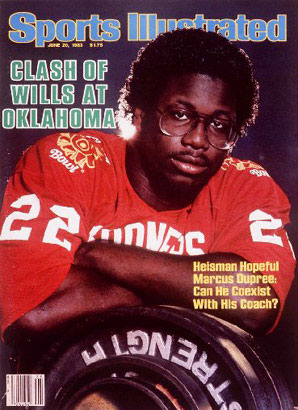
It is a phrase that conjures up missed opportunity, even sadness, but Marcus Dupree is at peace with the title of his documentary: The Best That Never Was. "There ain't no doubt that it's a good title for my story," said Dupree, arguably the greatest high school running back and the subject of a superb ESPN 30 For 30 documentary airing Tuesday night at 8 pm ET. "Everybody you talk to before or even now said I could have been the best."
Emerging out of Philadelphia, Miss., a city bathed in infamy two decades earlier after the brutal slaying of three civil rights workers, Dupree rushed for 5,283 yards and broke Herschel Walker's high school record for touchdowns (87). As a senior in 1981, he was the subject of an epic recruiting battle before he signed with Oklahoma, then coached by Barry Switzer. After initially being relegated to the bench, Dupree exploded onto the national scene, finishing his freshman year with 13 touchdowns and a 7.8 yard per carry average. His Fiesta Bowl record of 239 yards on 17 carries still stands.
With Heisman Trophy anticipation in the air, Dupree was featured on the June 20, 1983 cover of Sports Illustrated, but continuing conflicts with the Oklahoma coaching staff prompted him to quit the team midway through his sophomore year. In March '84 he signed a five-year, $6 million contract with the USFL's New Orleans Breakers and had a respectable, though not spectacular, first season. The next year he injured his left knee, ending his USFL career. Out of football for five years, Dupree rehabbed his knee back in Philadelphia and ended up making the Los Angeles Rams as a journeyman running back. He retired after two seasons, and then faded from the national scene and into the workaday world.
Documentary filmmaker Jonathan Hock, who at 46 is the same age as Dupree, had long been interested in Dupree's story after reading The Courting of Marcus Dupree, a look at sports and race in the South via the recruiting of Dupree by the late Mississippi novelist, Willie Morris. An eight-time Emmy Award winner and the writer and director of the critically-acclaimed documentary The Lost Son of Havana, Hock knew he wanted to tell Dupree's story when ESPN approached him in 2008 to be part of its documentary series.
Finding Dupree was not easy, though. Hock spent a couple of months searching for him to little avail. Finally, he hired a private investigator who found court records on Dupree's ex-wife that led to a church in Tallahassee. The filmmaker left his name and number at the church and the next morning he got a phone call: "Is this Jon Hock? This is Marcus Dupree." At the time Hock was on train back from Boston after a meeting with the Farrelly Brothers on Havana, which follows baseball great Luis Tiant on his first trip to Cuba in 40 years. "I said, 'Marcus you don't know how happy I am to hear your voice,'" Hock said. "He said, 'Hey, I'm happy to hear your voice, too.'"
Dupree had been driving a truck out of Tallahassee, one of a number of careers he'd held since retiring from football including casino greeter, B-level pro wrestler, CFL and NFL scout, and his current job working in Pascagoula, Miss. as part of the cleanup on the BP oil spill. "I didn't know what to expect," Dupree said upon meeting Hock in early 2009 to discuss the project. "I hadn't talked about stuff in a long time but I thought it was a way to tell my story and finally get the truth out."
Hock traveled to Mississippi in March 2009, Sept. 2009 and last summer for filming. Among those in Philadelphia he interviewed was Cecil Price Jr., a high school teammate of Dupree's who reflects for the first time on film about his father, the late Cecil R. Price, who as a deputy sheriff arrested the civil rights workers in 1964 and was eventually found guilty of delivering them into the hands of their killers.
As word traveled around Philadelphia that a filmmaker was doing a story on Dupree, Hock was eventually able to track down 16 millimeter black and white footage of Dupree playing at Philadelphia High. "This was our Holy Grail, because if you don't have the footage, you are just sort of going on everybody's word how good he was," Hock said. "When we saw the film and it was like: 'Son of a bitch, he was that good.' I was like, 'Boys, we have our ourselves a movie.'"
One of the film's memorable interview subjects is Switzer, who called his handling of Dupree his greatest coaching regret. "The only thing that hurts so bad was the stuff that Coach Switzer said in the film about how he didn't want the upperclassman to get jealous of me," Dupree said. "All he had to do was pull me into his office and tell me that. It kind of hurts that I might have missed three Heisman Trophy's and a national championship because of a lack of communication."
Dupree has three sons -- Marquez, 28, Landon, 25, and Rashad, 18 -- and says he tries to go back to Philadelphia once a month to see his six-year-old grandson's Little League games. Neither Dupree's children nor his ex-wife, Katrina Rush, chose to participate in the film, and Hock focuses little on Dupree's personal life after his football career ended. "I made the decision that this film couldn't be a comprehensive, in-depth story of Marcus's history," Hock said. "Rather, it had to be the story of his football life and its impact on the very special town that he comes from. The kind of dad or husband that he is or was is definitely part of his history, but ultimately I had to decide that it wasn't a core part of his story as a football player or his town's racial history."
Dupree harbors no regrets about what could have been and seems mostly content with his life's journey. "My life could be a little better, I mean, it wouldn't hurt to have $10 million in the bank," Dupree said. "I saw a lot at a young age and I'm glad this is happening now. This film is something my Mom (who died in 2004) wanted and I do think God has blessed me."
"I think it's complicated to be Marcus Dupree," Hock said. "He was not in hiding but I'm not sure how comfortable it is to be an honest, hardworking guy making a living when so many people you meet hear your name and expect you to be something else. The idea of truly great promise unfulfilled is very sad, but Marcus is not a sad person and that makes this story hopeful in the end. After the doctors told him he would never be able to play football again, for him to turn his life and body around and to end up making the NFL, that's a redemptive tale." -
USA Today

'The Best That Never Was' examines the rise and fall of Marcus Dupree
By Reid Cherner

For of all sad words of tongue or pen....The saddest are these: "It might have been!"
We are a nation obsessed with untapped potential. That is never more apparent than our fascination with running back Marcus Dupree.
Three decades after his star burned out, when he was barely out of his teens, we are still talking about him.
"The Best That Never Was" a new documentary about Dupree by writer-director Jonathan Hock will be shown on ESPN tonight (8 p.m. ET) as part of their 30 for 30 series.
Hock spoke to Game On! about the documentary.
Why the fascination with Dupree?
I think true greatness at the level of Marcus Dupree happens once a generation. And the idea that his generation, which is my generation, missed out on the one is hard to let go of. As sports fans we wait and wait for a guy like this to show up and when he does… it takes your breath away. And it keeps you coming back every Saturday, and every Sunday, to hope it happens again. What he showed in high school and college promised something that nobody had witnessed before in the NFL and we never got to taste it. You fall in love when you are a kid and its hard to let go of that.
Is this a happy or sad story?
I think it's a sad story about a person who is not sad. I think Marcus has genuine grace about himself. He does not harbor bitterness towards anyone who may have given him good or bad advice. He doesn't bemoan his bad luck. He acknowledges his own bad decisions without dwelling or them or wallowing in remorse. He feels blessed to have enjoyed the moments he was able to enjoy. That is a rare thing. What is so uplifting about the story is that so many of us dwell on what might have been.
When Dupree gets cut by the Rams during his comeback he seems to accept it and we believe him don't we?
That is what makes a very sad story ultimately a very uplifting film to watch. To see the perspective that he has its remarkable. It is as unique as his talent. To find life's blessings and enjoy those rather than dwell on what might have been.
Did you find it jarring that Dupree ended up to be friends with the son of the sheriff entangled in one of the ugliest racial incidents in our history?
I think Marcus led the town of Philadelphia, Miss., a town with a horrible past on its first steps toward reconciliation and leading to a better future. Today, Philadelphia has a black mayor. It is clearly not the town it was in 1964 when Marcus was born. I think it would be naïve to believe that he single-handed made this happen. But I do think it would be missing the point if you didn't acknowledge what this guy did was so extraordinary. What he did on the football field was so powerful, on a level that speaks across politics and beyond politics, and beyond hate and everything else that had brought Philadelphia down, that Marcus Dupree become the point at which black people and white people began to connect in a different way in the public arena. I think that is another thing that is so fascinating about him. It shows that the power of sports to reach across fences. The vagaries of race relations in the South are very deep and very hard to untangle. It is a very complicated situation….things are complicated and I think that the town's awful history, and the many great strides that have been made there, and Marcus's role in that, is something that is too important to ignore. One man's athletic greatness can be a point where people who would otherwise have no place to connect can begin to connect. T
Are there villains in this story?
Marcus story is the anti-Blind Side. Here is a guy who needed just one person who had the wherewithal to take hold of the situation in his best interests. And nobody did. I don't see it as villains but everybody in his life acted in their best interests and not in Marcus' interest. I think that's what people in college athletics do. Everybody is protecting everybody's interests. Who is looking out for the athletes? I think people try, I don't think anybody said in a pernicious way that 'I'm gonna cash in on Marcus and I don't care what happens to him.' Nobody in his life from Barry Switzer to Ken Fairly wanted bad things to happen to Marcus. Everybody loved Marcus. I think everybody in their minds were trying to do the best things for him. But the stakes are so high, and the money so big, and everyone stands to lose so much if it doesn't play out a particular way, you see people begin to act in their own self-interest.
Dupree didn't seem to want to be an NFL lifer did he?
You are talking about a guy whose career was really shipwrecked. ...All he does is go out and play football better than anyone else in the country. Then these forces take over his life. Forces that have lots of money and lots of power behind them. We would like to think he could steer the ships through the rocks…without losing his enthusiasm. I think that because there wasn't anybody to help him steer the ship I think its hard not to wreck and he got wrecked. I think if he had been handled differently and somebody take the wheel with him I don't think he would have gotten burned out. I don't think it would have felt like a curse to him. When he wrecked, I don't think its fair to say he wasn't going anywhere anyway. I think he was just lost so much early than anyone realized…I don't agree that he didn't have it in him to be a lifer in the NFL.
But he was tired of THE game if not the game. Fair?
Then I agree with you. He burned out on the game within the game. But it didn't rob him of his inner grace.
Why do sports stories resonate with us?
It's an interesting question, because this story and the (Luis) Tiant story are human stories first in a sports setting. I don't think of the stories I tell as sports stories. They're human stories about family, about loss and redemption. Marcus was just a guy trying to make his family proud, just like all of us. But sports are an all-or-nothing proposition - being a football player is not like being an accountant or a shopkeeper in that way. So when a small, personal, human story plays out in the world of sports, the stakes become so high and the drama so big because it's all-or-nothing. It's like we're watching the little dramas of our own lives played out on a stage more spectacular than almost any of us will ever personally experience. So that's a very compelling thing to watch. -
Hammer to Nail

BEST THAT NEVER WAS, THE
by Michael Tully
(The Best That Never Was premieres on ESPN on Tuesday, November 9, 2010, at 8pm.)
Considering the recent string of 30 For 30 documentaries, I was understandably worried to learn that Jonathan Hock's entry, The Best That Never Was, was of the feature-length variety. Could the story of Marcus Dupree, a boundlessly talented running back who never reached his true potential, sustain itself for 100 minutes? Thanks to Dupree, the answer is a resounding yes. In looking back on the events that led to his disappointingly unfulfilled career, Dupree reveals himself to be a quiet, humble hero filled with humility and grace. Aspiring athletes—especially those of you with the biggest of heads—should be forced to watch The Best That Never Was immediately.
For those viewers who don't remember the Marcus Dupree phenomenon, which didn't officially sweep the nation until Dupree burst onto the scene as an overnight sensation at the University of Oklahoma in 1982, Hock digs into the vaults to present a highlight reel of Dupree's high school exploits in late 1970s that is truly astonishing. As one interviewee recalls watching an underclass Dupree playing on the varsity squad, it was like Jim Brown had stepped onto the field of a high school game. Not only was Dupree an intimidating physical specimen at 6'2" and over 200 pounds of sheer muscle and brute force, but he was fast (he could run the 100 in 9.5 seconds). It was a combination that no one had ever seen up to that point, and hasn't since.
Dupree was born and raised in Philadelphia, Mississippi, home of one of the worst acts of violence during the Civil Rights movement. And while the emergence of Dupree didn't single-handedly solve the problem, the community nonetheless united in the stands every Friday night to watch their golden child score touchdown after touchdown. Unfortunately, this level of admiration helped to create an atmosphere of expectation that would contribute to Dupree's troubles when it came time to pick a college. After a heated battle between Texas, Oklahoma, and Southern Mississippi, Dupree settled on Oklahoma (thanks to a weekend spent with Heisman Trophy winner Billy Sims), where he immediately displayed his extraordinary talent but couldn't ever seem to please his coach Barry Switzer. This led to the first dramatic decision that would forever alter Dupree's future.
Watching The Best That Never Was, it's hard to believe Dupree wasn't cursed by some higher power, since his misfortune represented itself in so many different forms: poor guidance, twisted rules and regulations, debilitating injuries, etc. That simmering hunch is what makes this film so quietly crushing, for as we get to spend time with Dupree today, who pays the bills by driving trucks, it's impossible not to admire him. A much lesser individual would spend those silent highway hours bemoaning his fate, making bitter lists of the ways in which he was manipulated, but Marcus Dupree won't stoop to that level. He accepts his fate and has no regrets; he's thankful for the life that he has. Marcus Dupree is an American everyman who has nothing to show for his exploits except some bittersweet memories, a roomful of trophies, and the most amazing highlight reel you've ever seen. -
HitFix

'The Best That Never Was': Where have you gone, Marcus Dupree? By ALAN SEPINWALL
A week after arguably the weakest "30 for 30" film yet, we got one of the series' strongest installments with "The Best That Never Was." A few quick thoughts coming up just as soon as I give you my power of attorney...
It's been a while since a "30 for 30" film got a two-hour running time (most had to come in at an hour, and a handful got an hour and a half to two hours), and "The Best That Never Was" absolutely merited the longer slot. Jonathan Hock took a story I knew nothing about (as someone who doesn't follow college football, and was a little kid during Marcus' brief but brilliant Oklahoma career) and told the hell out of it. He got access to virtually all the major players, got tremendous candor from nearly all of them (Barry Switzer in particular, I thought), uncovered tons of great archival footage of Marcus' genius on the field, and covered all the angles. We got Marcus' story itself - which isn't exactly like any other college football story, but has parts in common with so many that it served as a stand-in for a lot of them - but also the story of Philadelphia, MS, and how the despicable villain of one true story (Cecil Price) can be a positive figure in another.
In sports, we talk about tiny fractions all the time as we look up the ladder of success: how only a tiny fraction of star high school athletes will go on to play big-time college ball, and how a tiny fraction of that group will do well in the pros. Marcus Dupree should have been one of those, but one thing after another went wrong. Maybe if he'd committed to Southern Miss to begin with, or if Switzer's staff had recognized that Marcus didn't need to be pushed in practice to be brilliant on game day, he'd have played three or four years in college, and gone on to the NFL. Maybe he'd have been in better shape throughout his pro career. Maybe he wouldn't have suffered that devastating knee injury. Maybe he'd have wound up with a legitimate agent who didn't leave him broke. But he made the decisions he made, others around him made theirs, and he had the life he had. Not a tragedy, exactly - how many get to shine as brightly as he did on the national stage, even if it was only for a season? - but not the triumph everyone expected from him.
Damn good film, and I'm glad after some recent shaky entries one of our closing movies was so terrific. Only one film left in the initial run of the series (Thaddeus D. Matula's "Pony Excess" on Dec. 11), followed by a handful of films next year (including Alex Gibney's delayed Steve Bartman film) that will air under the imprint. Though "30 for 30" has had its ups and downs, for the most part its impact on the sports documentary medium has been really impressive, and I hope ESPN keeps trying to make movies like this one when they have a story worth telling, and a filmmaker who can tell it with the style Dan Klores brought to "Winning Time," or the passion Barry Levinson gave "The Band That Wouldn't Die," or the scope that the Zimablist brothers gave to "The Two Escobars."
What did everybody else think? -
Sports Illustrated
The Stories Of Their Time
By Richard Deitsch
The drug baron Pablo Escobar explodes onto the screen six minutes into The Two Escobars. The thrilling documentary from ESPN's 30 for 30 series explores the rise and fall of Colombian soccer during its era of narco-fútbol, the deadly marriage of the country's cocaine cartels and soccer clubs that contributed to the death of Andrés Escobar, a defender for the 1994 Colombian World Cup team (and no relation to Pablo). Pablo arrives in the film as a larger-than-life figure: speeding on his motorcycle through the grounds of Hacienda Napoles, his opulent playground ranch in Puerto Triunfo, in a scene that promises a ride unlike any sports documentary the viewer has ever seen.
In the same year that ESPN broadcast The Decision, the self-aggrandizing shamathon featuring LeBron James, the network also produced some of its finest content since its inception in 1979. ESPN debuted 23 documentaries this year as part of 30 for 30, including arguably the four best documentaries of the series (The Two Escobars, Once Brothers, The Best That Never Was and June 17th, 1994). "We wanted to tell interesting stories that stood on their own," says Connor Schell, an ESPN Films executive producer and one of the men behind 30 for 30. "But we also wanted to tell a larger story collectively of what sports meant to the era, and where sports intersected with the era."
What started as a one-paragraph e-mail from ESPN.com writer Bill Simmons to his bosses three years ago about making documentaries on some of the iconic sports moments of ESPN's history has morphed into a critically praised franchise. The network tapped three groups of filmmakers for the project: those who had made significant sports films (such as Barry Levinson and Ron Shelton); accomplished documentarians with a built-in audience (Alex Gibney, Barbara Kopple, Steve James, Albert Maysles); and fresh voices, including Jeff and Michael Zimbalist, the codirectors of The Two Escobars, and Jonathan Hock, whose The Best That Never Was brilliantly chronicles the life of Oklahoma schoolboy football legend Marcus Dupree. The mix of directors provided a fascinating mélange of subjects and storytelling.
While 30 for 30 had misses (Marion Jones: Press Pause, The House of Steinbrenner and Silly Little Game were all muddled), collectively the series helped legitimize ESPN within the film industry. So impressive was The Two Escobars that it screened as an official selection at the film festivals of Cannes, Los Angeles and Tribeca, and at Amsterdam's documentary festival, the biggest in the world. ESPN executives say they are committed to long-form storytelling and want to be a player in the genre along with HBO Sports. "Documentaries are not medicine," said Schell. "They can be entertaining, interesting, informative, thoughtful and innovative in form."
Carrying on the 30 for 30 ethos, ESPN Films will debut documentaries next year on the University of Michigan basketball's famed Fab Five and on Olympic speedskating champion and celebrated humanitarian Johann Olav Koss.
"I think the main legacy of the 30 for 30 project [will be] the affirmation that there is still meaning to be found in sports, beyond the clatter of sports radio and argument-based talk shows," says Hock. "There's an audience grateful for programming representing a deeper level of thinking and feeling about sports."
-
-
Off the Rez (2011)
-
Courier-Journal

No reservations about 'Off the Rez' for Louisville's Shoni Schimmel
by Rick Bozich
The behind-the-back passes Shoni Schimmel invented instilled a persistent buzz in the KFC Yum! Center last season. The 15 points and nearly five assists she averaged for the University of Louisville women's basketball team placed her on a freshman All-America team.
But the Shoni Schimmel story likely to bring people out of their seats will be told in a gripping two-hour documentary titled "Off the Rez" that will air at 9 EDT Saturday on TLC.
It's the story of a young player determined to step beyond the cycle of failure and diminished expectations that surround her Native American world in eastern Oregon.
It's the story of a family fractured and then fused by a teenage pregnancy. There is the loss of a job, and the threatened loss of a home, but a prolonged determination never to lose hope. There is pride in achievement and fear of letting go.
But mostly there is an hour and 29 minutes of prolonged drama that producer Jonathan Hock captured while filming nearly 400 hours.
He documented the decision of the Schimmel family to leave the Umatilla Indian Reservation and move 200 miles west to Portland for Shoni's final two high school seasons as well as her decision to leave her comfort zone to play for Jeff Walz at U of L (where she will be joined by younger sister Jude next season).
No young woman, or man, raised on the Umatilla Reservation had ever earned an NCAA Division I basketball scholarship. Shoni's fiery mother, Ceci Moses, should have been the first.
But she wasn't.
Now you begin to understand why "Off the Rez" is more than a basketball story.
"No. 1, we were hoping to convey the story of a family that through its love for each other was going to venture into the unknown together," Hock said. "We were going to see what was going to happen. Succeed or fail, it was going to be their love that carried them through.
"The other thing that I really hope people take away from this is what I learned during the filming: how great the obstacles are for Native American kids. With all the great pull-yourself-up-by-your-bootstrap American stories, these people have really been excluded from that, forcibly, to the point where it became a self-fulfilling prophecy on the reservation. -
The Hollywood Reporter

Off the Rez: TV Review
by David Knowles
Jonathan Hock's basketball tale about a Native American high schooler airs on TLC on May 14. Does the anguished history of a people inspire future generations to achieve new heights or is it a millstone around one’s neck, ensuring a continued legacy of hardship and despair? For Shoni Schimmel, a top female high school basketball prospect who grew up on Oregon’s Umatilla Indian Reservation, that question is at the center of her quest to make it in a sport with few Native American participants.
Written and directed by Jonathan Hock (Through the Fire, 30 for 30), Off the Rez paints a deeply affecting portrait of Schimmel and her family as the fledgling star makes the move from the reservation to Portland, Ore., where she ascends to national stardom as a junior at Franklin High School.
"Shoni has been taught a lot of the history," Lillian Moses, Shoni’s grandmother, says in one of the many one-on-one interviews threaded throughout the engaging film. "So when she plays, it’s almost like she plays for the Indian people, and she plays hard."
Ancestral pride is often not a clear-cut matter, however, as the film’s most fascinating character, Shoni’s fiery mother, Ceci Moses, illustrates.
"The reservation life is a good thing, but it also can be a bad thing," Ceci says. "It can hold you down, it can hold you back, because there are a ton of Indians that have a lot of talent, and they just don’t do anything with it."
Once a basketball prodigy in her own right, Ceci is convinced she was passed over by college scouts because of her ethnicity, and her reflections about her own career are by turns bitter and defiant.
"People don’t usually believe in Native Americans," Ceci says. "But really probably the hardest part is most of the Native Americans don’t believe that they have a chance because of what’s happened in the past with the Native American people."
Like Steve James’ award-winning basketball documentary Hoop Dreams, the sport itself serves as a metaphor and the conduit for a story about perseverance, racial politics and inner conflict. It also fills Off the Rez, which premiered at this year’s Tribeca Film Festival, with an abundance of ready-made drama.
Ceci accepts a coaching job at Franklin so that she can personally foster Shoni’s development, and their impact on the formerly flailing team is immediate. It’s thrilling to watch Shoni light it up in her first game, scoring a school-record 42 points.
After finishing dead last in the conference the year before, Shoni and her younger sister Jude lead the team to the state tournament, and Shoni is soon ranked as the eighth-best high school player in the nation. But not all of her new neighbors prove so welcoming.
"We’ve had to endure racial slurs in the stands," Shoni’s white father, Rick, says. "We had a note brought to our door that said, ‘Go back to the f---ing reservation.’ " After losing his job back on the reservation, Rick struggles to pay the mortgage on the Portland home where Ceci and the couple’s seven children now live. The bank threatens foreclosure, and Ceci — having sacrificed so much for Shoni — seems to falter under the pressure.
"They work really hard to mentally defeat the Native American, then the Native American gives up and quits, and a lot of them will go drinking and drugging," Ceci laments, and for a moment you wonder whether that fatalism will send the family back to the reservation once and for all.
Despite scholarship offers from many of the nation’s top colleges, Shoni puts off making a decision as to which she’ll attend, and the film invites us to think she might opt out of school altogether to stay close to her family.
"We have been conditioned to fail," an elder back on the reservation says. "But Shoni has caught a chance. This whole history of athletes not making it is riding on Shoni’s shoulders. Everybody is watching her."
Shoni does persevere, of course, as a human being and as a player. Despite its hard dose of reality, there’s plenty of uplifting payoff in Off the Rez, and viewers who are not basketball fans will be riveted by the film’s tightly edited, climactic scenes of conference playoff games.
Without giving away what happens to Shoni and her family, the most satisfying part of Off the Rez is entering the lives of characters seldom seen on American television screens. Their struggles, self-doubt and, yes, triumphs make for an engrossing film, whatever one’s race, gender or tribe. -
The Miami Herald
Plenty of net gains and personal losses for a budding sports star
BY GLENN GARVIN
A couple of years ago, women's basketball fans all over the country were perplexed by Shoni Schimmel, the fireball guard who was slashing high-school opponents to ribbons all over Oregon. Practically every recruiting service in the country ranked her among the top 10 players, and dozens of colleges were begging her to join their programs. But Shoni ignored them all. She wouldn't even take phone calls from coaches. The first date for signing a scholarship letter of intent passed, then the second, and still there was only mysterious silence from Shoni.
If fans could have seen the hours of footage being shot by director Jonathan Hock for his documentary Off the Rez, they might have understood. It's a soul-searing tale of a teenage girl burdened with the dashed dreams and unfulfilled expectations of an entire people scarred by insults and betrayals committed years, even centuries, before her birth. It's 120 minutes of anguished brilliance, and if you don't watch it you're flat-out nuts.
The "rez" of the title is the northeast Oregon reservation of the Umatilla Indian tribe, of which Shoni is a member. As the documentary opens, she is leaving the reservation with Ceci Moses, her mother and coach. They're headed for a bigger high school across the state in Portland, which they hope will serve as a better platform for Shoni to win a basketball scholarship, which no Umatilla has ever done, and for Ceci to prove she can be more than a volunteer coach at a tiny school off all known sports maps.
But Shoni obviously is playing for far more than a college education. In the collective consciousness of the reservation, purposefully or not, she's become the instrument for everything from validation of her parents' interracial marriage to redemption of the Umatilla tribe's hornswoggling by Washington 155 years earlier. A lot of frustrated jocks, no doubt, live vicariously through the athletic achievements of their kids. But in Shoni's case, the mélange of old disappointments and thwarted ambitions carries a poisonous streak of race. Her white father Ray was a major-league baseball prospect until he dropped out of Stanford to marry her pregnant mother — a marriage that caused much of his town, including his father, to quit speaking to him. Ceci is convinced that her promising high-school basketball career was blighted by a racist coach. And other members of the tribe chime in with tales of Umatillas whose journey to stardom was waylaid by alcohol or racism. For Shoni's grandmother, what's at stake is nothing less than compensation for the loss of the tribe's nomadic life when it was confined to the reservation. "We're awfully hurt," she murmurs. "We're a hurt people."
But Shoni's success on the court in Portland does little to heal the old hurts, especially for her mother. Ceci's eyes glow with a hellfire rage as she coaches her team to view every game as a war against the rest of the world. Every missed shot, every lost ball, every bad call by a referee is part of a conspiracy against her players. "Jump on them like they jump on us!" she screams during a timeout in one close game. "[Bleep], you gonna foul, foul good and hard! …You dig down deep, and you go hard, and you take it away from them. You take it away from all those people who don't want you to have it!"
But Off The Rez is something far more complex than simply a standard text on victimology. Ceci, for all her sensitivity to every real and imagined sleight, acknowledges that not every setback can be chalked up to racism.
"The reservation life is a good thing, but it can also be a bad thing," she says in a reflective moment. It could hold you down and hold you back. Because there are a ton of Indians that have a lot of talent, and they just don't do anything with it. ... I was actually one of those."
Buffeted by such angry torrents (as well as others more temporal; after Ray loses his job in a corporate shuffle, the family faces foreclosure on its new Portland home), it's hardly a surprise that Shoni grows more taciturn by the day, letting her basketball game do her talking. That part of her story, at least, has a happy ending, as anyone who watched the NCAA women's basketball tournament this spring knows. What remains to be seen is whether the Schimmel family can answer its own prayer.
"Every night," Ceci says, "I'm like, ‘God, help me to be a better person. Help me to be better, because I don't want to be mad. I have a lot to be happy about.' And I'm trying to get to that point." -
DIME Magazine
A modern day Jackie Robinson
BY ARON PHILLIPS

A vicious cycle is defined as a chain of events in which the response to one difficulty creates a new problem that aggravates the original difficulty. Thus is the perceived life on the Umatilla Indian Reservation in Eastern Oregon. But Shoni Schimmel changed all that.
Schimmel, who just finished her freshman season as the starting point guard at the University of Louisville, had to overcome stereotypes, slurs and financial hardships to make it to where she is today – think Hoop Dreams meets Glory Road. And in Jonathan Hock's latest documentary, Off the Rez, that premiered at the Tribeca Film Festival Tuesday night, you're taken along for the unforgettable ride.
After playing her first two years at Hermiston (Ore.) High School near her home on the rez, Shoni quickly became known as one of the best high school basketball players in the country. But in order to make the jump to the next level, she and her family – which consists of seven brothers and sisters – knew that they'd have to move three hours east to Portland.
Transferring to Franklin High School for her junior and senior seasons, Shoni was not alone, as her mother, Ceci Moses, took over as the head girls basketball coach. Leading by example, showing her children not to limit their dreams, the story that unfolds is riveting, as mother and daughter battle against all the odds.
"The mother-daughter relationship is so complicated," says Kelly Ripa, co-host of LIVE! with Regis and Kelly and executive producer of the film. While many people might see Ceci – a former high school basketball star in her own right – living vicariously through her children for the opportunities that weren't afforded to her, Ripa notes that it becomes evident that her children are actually living through her.
While the basketball highlights are incredible – Shoni finished her senior year averaging 29.8 points, 9.0 rebounds, 7.3 assists and 5.5 steals along with 2,120 points for her career, ranking her sixth on Oregon's all-time scoring list – it's the story that keeps you glued to the screen. As so many people before her were said to be "conditioned to fail," Shoni becomes larger than the game she loves; a symbol for her teammates, her family and Native Americans all over. A modern-day Jackie Robinson.
Through a multigenerational story, Hock captures Shoni and her family at their highest peaks and lowest valleys. From a broken foot midway through her junior year to the bank foreclosing on their Portland home just hours before a pivotal state playoff game, the obstacles they overcome only make you cheer for them harder.
"We were concerned about her ankle junior year and the financial trouble after the season," says Hock about the struggles of dedicating two years and 96 days of shooting to the project. "But this family laid it all on the line."
"You have got to believe," adds Moses. "When I was growing up, I wasn't told about ‘college.' Scholarships take you places. I want to teach people, ‘You can do this.'"
With the dream of becoming the first from her tribe to get a college scholarship, it's ironic that it takes Shoni until her high school graduation to make a decision. But it's this indecision that drives the film. Will she fall victim to the vicious cycle and stay on the rez? Is she "conditioned to fail" like so many people think she and other Native Americans are? Or will she take a chance, leave her comfort zone and go away to school?
Adds Ripa, "The fear of the unknown can be so paralyzing."
Fortunately, the risk paid off. This year, Shoni averaged 15.1 points and a team-high 4.9 assists per game for the Lady Cardinals, and was named a First Team Freshman All-American by Full Court Press. She was also a unanimous selection to the Big East All-Freshman team and earned Big East Honorable Mention honors, leading the league (and 24th in the nation) in three-point field goals made with 2.8 per game.
One of Shoni's greatest concerns when picking a college far away was that her family wouldn't be able to see her play. As fate would have it, her last game of the season – a Sweet 16 matchup with Gonzaga in nearby Spokane, Wash. – allowed her whole family to come and watch. For the Tournament, Shoni led the team and all freshmen in scoring with 23.3 points per game.
In 2005, Hock premiered Through the Fire, a film that followed the journey of high school phenom Sebastian Telfair, at the Tribeca Film Festival. Six years later, he tells a similar tale – only this time he shows you that ghettos and dreams aren't just found in the inner-city. -
SLAM Magazine

Interview with OFF THE REZ director Jonathan Hock
by Sam Riches
Shoni Schimmel streaks down the left side of the court, her long brown ponytail bouncing in the air behind her. At full speed, she uses her right hand to wrap the ball behind her back and through her legs, before gently laying it off the backboard with her left. Her defenders, now a few steps behind her, never stood a chance.
Schimmel is from the Umatilla Indian Reservation in Oregon. Situated a few miles outside of Pendleton and just north of the Blue Mountains; Umatilla is home to around three thousand Native Americans. For Shoni, it is also her proving ground. She plays ‘rez ball,' a ferocious, attacking style of basketball, fueled by passion, creativity and relentless aggressiveness. It is this flare and fearlessness that has resulted in many declaring Schimmel the second coming of Pistol Pete Maravich. A comparison that, while initially seeming improbable, is startlingly accurate.
With her junior year approaching, Shoni's mother, Ceci, (they are left to right in photo) was offered a coaching position at Portland's Franklin high school. Seeing this as an opportunity to chase a dream and battle against generations of oppression and bigotry, Shoni and her family leave the reservation and embark on a battle that tests their strength, spirit and tenacity.
Eight-time Emmy award winner and long-time friend of SLAM's, Jonathan Hock (learn more about him at hockfilms.com) documents the journey in Off the Rez and caught up with SLAM this past week.
SLAM: You've done work in baseball, football and wrestling, but the majority of your work has been focused on basketball, why is your passion so strong for the sport?
Jonathan Hock: Basketball players aren't hidden behind helmets like football players, or are a mile away from you on the field like baseball players. It's a sport where a player's passion is so close at hand, and when the stakes for are so high for the player and her family, as they are for Shoni or as they were for Sebastian and his family in Through the Fire, that other sports can't match it.
SLAM: How did you first hear about Shoni?
JH: Nelson Hernandez, who became a producer on the film, was a graduate of Lincoln High School and a fan of Through the Fire. He was out west running a Native American youth organization, and with basketball as big in Indian Country as it is in the hood, he was very plugged into the incredible talent in the Native American community. In the aftermath of the terrible killings at the Red Lake Reservation in Minnesota, Nelson was organizing a youth conference there and got in touch with me to ask if he could show "Through the Fire" at the conference as an inspiration to the kids. A couple of years later, Nelson told me that he had found the next Through the Fire story on a reservation in Oregon. I flew out to meet Shoni and her family, and found the same love and passion in them—and the same kind of incredible basketball genius in the high school player—as we found in Coney Island.
SLAM: The film captures the struggles faced by the family and the tenacity and courage it takes to pack up and move in hopes of achieving a goal – where does that courage stem from?
JH: Shoni clearly draws courage from her mom, Ceci Moses. Ceci is has a strong, clear-headed awareness of how history and society are aligned against her people, in obvious ways and in more subtle ways that people from the "outside world" don't really notice. But Ceci does not back down when she confronts adversity—sometimes it seems like she's trying to undo 400 years of oppression every game—and I don't think Shoni knows how to back down either."
SLAM: Did you see similarities in the social and economic challenges faced by Shoni and her family in comparison to the issues faced by Sebastian Telfair and his family in Through the Fire?
JH: I think our society as a whole is set up in a way to keep the people oppressed on the reservation and in the inner city ghettos. Geographically, psychologically, economically, the system that we operate under is set up to keep those people there while the people with the resources and the power keep what they have. In recent decades, people in the hood have been able to break out of the invisible walls that enclose the ghettos, though the odds against them are still huge. On the reservation, the invisible wall that separates them from the outside world is even more impenetrable. So to try to break out of the psychological and economic confines of the reservation is so difficult, especially if you want to do it on your own terms, without compromising who you are or what you represent. That's what Shoni's family was trying to do, and it was very inspiring to watch.
SLAM: When you first approached Shoni and her family, were they receptive to the idea or did it take some convincing?
JH: They were receptive to the idea of spreading a good message for their people,but there was some level of distrust that had to be overcome. Here's a white guy from the east coast and I'm not sure it was easy for them to trust me. Historically, they certainly had every justification to be suspicious. But as a filmmaker I believe you try to let your empathy for the subject guide you—you don't impose some pre-ordained ideology or let some political agenda box you into your story. We were open to their truth, and after a while they came to understand that on some level, I think, and we were able to break through.
SLAM: Was that initial distrust the biggest obstacle you faced in making this film?
JH: I think so. You need your subject to trust you when your sitting in their living room or kitchen or locker room with a camera.
SLAM: How important is basketball for the youth on the reservations?
JH: On the rez, they talk about basketball as a way to battle for their tribe's dignity. To take your best five and travel to another reservation or take on some team from the outside, that's a tremendous source of pride for them. And it makes the game matter so much.
SLAM: Why did you want to tell this story?
JH: Partly, I wanted to shine a light on the forgotten hood. The reservation is just another manifestation of the hood in America, only it exists so far out of the light of the mainstream that people don't know about it. I didn't know much about it, but I was curious, and I found a family that believed in something and was trying to accomplish something I could relate to. So I just stayed with it and now, two and a half years later, we have the movie.
SLAM: Are you still in contact with Shoni?
JH: Oh yeah, we went down to see her at Louisville and shoot a little this season, and I speak with her dad Rick regularly. You don't put the cameras down and just move on. I actually was just exchanging text messages with Jamel Thomas, Sebastian's brother, this morning, and we stopped filming Through the Fire in 2004. You develop a relationship when you work with people and when you respect them and they respect you, the relationship doesn't end the day you stop production.
SLAM: Because of the intimate nature of making a documentary, do you find you have to try and emotionally remove yourself from the process?
JH: The opposite actually. Don't be afraid to let your emotions be present when you shoot. Steve Sabol, my mentor at NFL Films, taught me not to be afraid to feel deeply for your subject. Follow your heart when you shoot, not your head, and you'll get at a deeper truth.
Off the Rez is a richly layered film, one that captures the emotional toll of an athlete carrying the hopes of a community while also being part of a family struggling to make ends meet. The film offers a glimpse into the realities of being a member of an often overlooked minority and touches on universal themes of equality and subjugation, while also providing an inside perspective to the realities of being one of the best high school basketball players in America.
Off the Rez will be debuting at the Tribeca Film Festival tomorrow, April 26th and premiering on TLC Saturday May 14 at 9 p.m. EDT. -
Film Journal International
An edge-of-your-seat sports movie with heart
Fictional sports movies have it tough. The narrative that repeats over and over again is that of the underdog team that comes from behind and wins the championships. Audiences are bored of this predictable plotline, but it's also the most satisfying story arc. Sports documentaries have a wonderful out: Everything they're covering actually happened. If they win the championships, great. If not, it doesn't matter, because the experience feels real and visceral. Every moment the players are behind or ahead feels that more intense because it was an actual game.
Off the Rez is the latest sports documentary from Jonathan Hock (Through the Fire), whose sports-centered non-fiction films have been a Tribeca Film Festival fixture. At a "Tribeca Talks" screening last night, viewers saw the movie for the first time. A panel followed that included the director, executive producers Kelly Ripa and Mark Consuelos, and the stars of the documentary. Their candid, revealing responses provided insight into the filmmaking process that drove home the film's heartbreaking struggles and inspirational story.
The movie centers on Shoni Schimmel, a promising Native American basketball player who lives on the Umatilla Reservation in Oregon with her family. During her junior and senior years of high school, her family moves to Portland, Oregon, in order to give her a better shot at making it big and getting recruited by a top college. It's also a family story--her mother is her basketball coach, and her younger sister Jodi is her teammate. Her mother Ceci has an astonishing eight children, which helped the film get picked up by TLC. At the "Tribeca Talks" panel afterwards, TLC group president Eileen O'Neill wryly noted, "We do big families pretty well," referring to the channel's numerous shows featuring supersize broods.
Racism, too, factors heavily into the film. Shoni is the daughter of a Native American mother and a white father, a marriage that the community did not take kindly to at the time. Ceci, Shoni's mom, described the attitude around the Oregon reservation as "cowboys & indians," and that kind of prejudice persists in the community. The pressure for Shoni to perform well is amplified by the expectations of both her family and the community. It turns out that many Native Americans have excelled at sports, only to wither at their moment of promise, quitting college to return home to family or not understanding the "ticket" that such a scholarship can provide. Shoni's own mother was up for a scholarship but her coach encouraged recruiters to focus on her white teammate. As the moments tick down to make a choice for a college team, Shoni hesitates, then hesitates again, sending viewers like me into a fretting frenzy. Will she bow out? Does she have the courage to leave her community? Will she succumb to their pressure?
Off the Rez also includes a timely subplot: the subprime mortgage crisis. The family buys a house in Portland because it's cheaper to buy then rent, but their payments soon escalate. After hard times hit the family, the house moves into foreclosure. If Shoni was paralyzed by the decision-making process before, this added stress further delays her college choice.
Director Hock has ample experience with sports scenes, and it shows. Shoni is a miraculous player, with plenty of style and an ability to swoosh shots despite being heavily defended. The players are also incredibly expressive. As the moderator, Friday Night Lights author Buzz Bissinger noted, "Girls are more fun than boys to watch because they cry constantly." He meant it as a half joke, but it's true. In the locker room after a loss, tears stream down the cheeks of athletes with aggressive on-court game faces. And why wouldn't you cry because you just broke a foot, had a knee jammed in your face, or can't breathe because you have undiagnosed mono?
Off the Rez is an edge-of-your-seat sports movie with heart. It also offers eye-opening accounts of racism and reservation life, along with a side of the mortgage crisis--you can't get any more topical than that! Catch it at the Tribeca Film Festival or when it airs on TLC as a two-hour special on May 14th at 9pm. -
Tribeca Film Festival Interview
Off the Rez: Jonathan Hock
By Emily Ackerman

Tribeca: Welcome back to Tribeca! You were here in 2009 with your film Lost Son of Havana, and also in 2005 with Through the Fire, which was your first feature documentary.
Jonathan Hock: It's always great to be a part of TFF!
Tribeca: So you are certainly not a first-timer when it comes to sports documentaries: Streetball, This is the NFL, The Streak, and Michael Jordan to the Max. What drew you to this genre of documentary filmmaking?
Jonathan Hock: My two great loves were always sports and movies, and I went to NFL Films after college because I felt that was the best place to combine them. They were making real films there and not just putting highlights of action together. They were telling stories, which is really what I like to do. So when I went out on my own, the part of the world I was very familiar with was sports. But the films that I've made since leaving NFL Films are not really sports films in my mind. One of the characters in my films plays or played a sport, but the narrative is always about people trying to either put together pieces of their family that have been torn apart or to lift their family into a new circumstance, which was the case in The Lost Son of Havana. Luis Tiant had left his family behind when he lifted himself out of poverty in Cuba by coming to play baseball in the US. He was not allowed to go back to Cuba or have his family come to the US, so when he finally went back after 46 years, he was putting his family back together. Through the Fire was about Sebastian Telfair, a high school kid in Brooklyn who makes it to the NBA. He and his brothers lifted their family out of poverty in Coney Island through basketball, but the story was not about how well Sebastian played, it was about how the family came together and how the brothers all sacrificed to make it happen.
Tribeca: Tell us a little about Off the Rez.
Jonathan Hock: In Off The Rez, basketball star Shoni Schimmel is the person around whom the narrative revolves, but the real igniter to the story is her mom Ceci, who has it in her head that she is going to show her 7 children—which became 8 while we were filming—the limitations of staying on the Umatilla Indian Reservation in Oregon where they live. It's a very closed-off world, and people there are forced to accept a very limited life as it relates to fulfilling their talents, whether they are academically, artistically or athletically gifted. There is a great deal of basketball talent on Indian reservations, and very rarely do you see somebody make it out. So Shoni's mom took her family off the reservation to become a coach and show them that you can succeed in what they call "the outside world": you don't have to be afraid of it, and you can take it on in your terms without compromising your values or dignity. The 2 years that Ceci coached Shoni's basketball team while we were filming, she faced a lot of really hostile welcomes. Everyone said nice things, but they really wanted the family to fail.
Tribeca: I wanted to ask you about that, because though the prejudice is discussed in the film, it is hard to see first-hand.
Jonathan Hock: The family feels very strongly that the refereeing has always gone against them. In tournaments they played as youth teams or in summer leagues, when they would be playing white teams off the reservation, they would always get terrible calls. In the film, Shoni's grandmother tells a story about a tournament when Shoni was 11 or 12 years old and she was scoring 50 points every game, and suddenly, as it got to the finals, the referees were calling fouls on her every time and not calling the other girls who were clobbering her.
So the feeling in the family is that this all stems from prejudice, and whether it's conscious or unconscious they don't care to quibble, but they don't deal with it sitting down. You see in the film both Shoni and her mother give the refs an earful. In certain ways, Shoni is sort of a Jackie Robinson figure, because she is really pioneering a certain world for her people, but in the stories you hear about Jackie Robinson, it seemed as though he always had to hold his tongue during the games. This family didn't feel they had to do that. You shout at them, they are going to shout back, and to see these really strong women doing this was really inspiring for me.
Tribeca: You capture a lot of these moments of shouting or fighting back in the documentary, particularly when it comes to Ceci. She uses strong language in front of her own kids as well as the high school girls she coaches. Did you find this inappropriate?
Jonathan Hock: I wouldn't speak in front of my children like that, but I don't have to. I'm not fighting for my children's opportunity. I work hard for it, but I'm not fighting for it, and there's a huge difference. Whatever Ceci gets in life, she is going to have to fight for, and she is willing to fight anyone for her kid's opportunity. I have a great deal of admiration for what she has done and what she continues to do for her children. I don't always like watching her do what she does. I think it's hard to watch somebody who is so intense and confrontational in front of children, but I don't judge it because I know that she has a very different situation from me.
I also think a lot of the time she was acting as a lightning rod for Shoni. I think she welcomed the negative attention she drew to herself as long as it was taking the criticism off of her daughter. There is one newspaper we show in the film that wrote an article about Shoni, and though it is flattering of her basketball skills, it is laced with a really loaded comment about how Franklin (Shoni's high school) "sold its soul to the devil." Maybe it was innocent and a poor choice of words, but when things like this happen over and over, you tend to believe they are intentional. So the more Ceci could draw attention to herself, the easier it was for Shoni to relax and play basketball.
Shoni is a very sensitive kid and you can see in the film how she struggles to accept a basketball scholarship from any of the many schools interested in her. She's very strong and powerful on the court but when it comes to her family, she's very protective, and the idea of leaving them was impossible for her to handle for a very long time.
Tribeca: It's easy to see the change in Shoni and her brothers and sisters' demeanor when they return to the reservation in the film. They all seem to be much happier and more at ease with themselves once there.
Jonathan Hock: When you've grown up in this really cloistered existence, not by choice but by history, and law in a lot of cases, you have 4 generations of people on the reservation who don't have anything but each other. And when we were there, the kids were so happy, comfortable, and fun, and were always playing practical jokes on the crew; it was a riot to be with them. For them it's like summer camp, in the sense that there is this open campus and it's all safe, familiar and all yours. But then in Portland, it was very different. They were in a house and a neighborhood, where it's quiet and none of the people were their people.
Tribeca: What's the craziest thing (or "lightning strikes" moment) that happened during production?
Jonathan Hock: For me, that was the very first time I met Ceci. I had found out about Shoni through Nelson Hernandez, who is one of our producers. He was running a National Native American Youth Federation Foundation, and after the Red Lake massacre he organized a national youth gathering at the Red Lake reservation where those murders took place. He asked if they could show Through the Fire at the gathering, because basketball is such an obsession nationwide on Indian reservations and he felt it would be a very inspiring story about a family who stick together when the forces outside their neighborhood are trying to tear them apart.
So they showed the film there, and a couple of years later he got in touch with me saying he had found my next subject and she was going to be the next best basketball player in the country. She was probably a freshman in high school at that point, and I saw some of her high school clips on YouTube, and she was certainly an incredible player, but I didn't really know much about her story.
So I got in touch with the family, and it turns out they were leaving the reservation. So I flew out to Portland and met the family the day that they moved off the reservation, and they didn't have anything in the kitchen yet, so we all went out to the Sizzler steakhouse for dinner: 7 kids, the grandmother, the great-grandmother, and me! Shoni was very shy and didn't really want to talk much, so I sat with Ceci and I asked her who this move was really for—because there was suspicion at the time that she was just using her daughter's skill as a basketball player to get a job. The truth had been that she had applied to 500 other schools to be the coach, and because she had only coached youth teams on the reservation no public school would give her a chance. The 501st school finally said yes.
Then she started to explain why she felt she had to move the family. She started telling me about what they see as their potential as human beings on the reservation. Spiritually and family-wise it's very high, but in terms of fulfilling the potential of your talents, she said it was a dead end. She started to cry, and as she looked at her kids, she said, "My children are so talented, and I have to show them before it's too late, by my example, that you can leave the reservation and succeed on your own terms in the outside world. If you want to go back to the reservation you can, but you'll go back having fulfilled the destiny that's yours by virtue of your talents and your character." Well, THAT was a story, and then we followed Shoni as this dream came true for her.
Tribeca: How receptive was the family to being the subjects of a documentary?
Jonathan Hock: I try to be as up front with people as possible, because what you have to have when you're following a family for 2 years is trust. They have to know that they can trust your intentions, and you have to tell them up front there are going to be things in this film they are not going to like seeing. But I told them my goal as a filmmaker was to bring what's in their heads and heart out to the public. I want people to experience the film through their shoes. It isn't my political agenda. Every time you make a cut in the edit room, you're altering reality and it's not purely objective, but as a filmmaker I'm not afraid of subjectivity, as long as it's guided by empathy for the subject.
So the family watched some of my previous work and said they felt safe with it. Honestly, I'm not sure how much they trusted me throughout the filming process. Culturally, I don't think it was ever comfortable for them to open their world to our camera crew, but they trusted in the story, and particularly did so after a short piece on the film ran on ESPN and garnered great interest from the Native American community.
Tribeca: What's the biggest thing you learned while making Off The Rez?
Jonathan Hock: How separate and isolated the Native American community is from what they call the outside world. Even though I knew the reality of the poverty and the drug and alcohol problems on the reservations, I think I still had this notion that it was as seamless a connection to the outside world as the borders are seamless. You know, you drive on the highway and there's a sign saying, "Entering the Umatilla Indian Reservation," but there really is a wall there. The people are raised there with such a lack of understanding of how the world outside the reservation works.
I certainly understand it now, and my hope is that the film will help young Native American people with talent and dreams to not be afraid. As unfamiliar and as difficult the terrain is, they can still make it, and this is something that they don't know. Shoni and Ceci are certainly not the first Native Americans to have succeeded off the reservation, but it's much more rare than you would think and much rarer than it ought to be. I hope there will be young people who will be inspired by Shoni's story and will seek to fulfill their destinies.
Tribeca: What are your hopes for Off The Rez at Tribeca?
Jonathan Hock: I was working in this neighborhood on 9/11, and I feel like the Festival, for as big and commercially successful as it's become, still represents the idea that in the face of something terrible, you stand up and do something great, and it's great that there is that same spirit in this film. Shoni and her family are people who would not be deterred or defeated by the circumstances that the world had put out for them. They were going to create their own joy, in the same way the Festival did that here, and it has been so incredibly successful that we don't even remember why it started sometimes.
Tribeca: There will be a Tribeca Talks: After the Movie panel following Off the Rez's world premiere. Who will be attending?
Jonathan Hock: We have Buzz Bissinger, the journalist who wrote Friday Night Lights and has won a Pulitzer Prize, and he's not one to hold back either, so having him and Ceci interact is going to be a lot of fun. Eileen O'Neil, who is president of TLC Networks and Discovery Networks, will be there, and she is the person who got behind this film at TLC when they funded it after we'd been shooting for a year. Kelly Ripa and Mark Consuelos [who will also be at the panel] are executive producers on this film and they had a first-look deal, and we had no expectations that TLC would want to do something with this film.
It turns out Eileen had played high-school basketball and felt very passionately about the story, and even though it wasn't an easy fit for her network, she was so inspired by the story that she got behind it. Also all 16 members of the Schimmel family are going to be there, including Shoni and her 7 brothers and sisters! Most of them have not been to New York, so it will be very exciting. I haven't seen them since we stopped filming in Portland close to a year ago, and they haven't seen the film yet. But they are getting to New York a couple of days before the screening, so we will organize for them to see it before they have to watch it with people.
Tribeca: What's your advice for aspiring filmmakers?
Jonathan Hock: Find a subject that you feel passionate about, and don't be afraid to fall in love with it/them. When I say fall in love, that also means embracing their flaws. You have to present these flaws onscreen, otherwise it's not going to feel real and it won't be real. Don't be afraid to feel deeply for what you're doing and trust your feelings, because they will guide you to those moments where your subject is going to reveal something very important. Also, if you keep your subject at arm's length and be purely analytical and try to have your subject bear some kind of pre-conceived notion for you, you're not going to get anything interesting out of them. It's going to be an essay of your thoughts on people with pictures. Film with an open heart, because that's what will guide you to the truth.
Tribeca: You founded and run The Reel People Film project, a program of film workshops for at-risk youth, and we gather that you met one of your go-to Director of Photography through this program?
Jonathan Hock: In 1995, I left NFL films, where I had worked for a long time, and started a workshop for at-risk youth, and one of the young people who came to the first group was Alistair Christopher, who was 15 at the time. We were shooting 16mm film donated by Kodak (NFL Films donated all the equipment), and we went around the city making short first-person narratives. When this young man picked up the camera, it was like he was born with it in his hand. He had an eye for composition, as he had done some illustrations growing up and graffiti art type things, and he learned how to use the camera and a light meter and got everything right and always ended up with beautiful images. And when I started making films again, he started hanging around the office, and we'd give him a camera and send him out to shoot some second unit stuff. When he was around 19 or 20, he came out to shoot B camera and a couple of verite-style shoots, and it was quickly apparent that he was not going to be the B camera for long. So I demoted myself to B camera, and he was promoted to A camera, and we've been working together ever since.
Tribeca: If you could have dinner with any filmmaker (alive or dead), who would it be?
Jonathan Hock: Besides Robert De Niro, I would have to say Roberto Rossellini. I find his War Trilogy and those early Italian neo-realist films in general to be incredibly inspiring, because those films are great examples of loving your subject and simultaneously showing them warts and all. So little can take place in terms of a narrative and so much happens to the people in his films. I also appreciate the political stance his films present—that "the system" is aligned against the people and individuals. When people take on that system in a very humble way, just to try to succeed within it, it's the greatest, most heroic thing that ordinary people do. I would love to hear how he found these stories.
Tribeca: What piece of art (book/film/music/TV show/what-have-you) are you currently recommending to your friends most often?
Jonathan Hock: I'm recommending the new edition of The Elements of Style, the old Strunk and White book that Maira Kalman has breathed new life into with new illustrations and paintings. It takes these old notions of proper writing and makes them feel like somebody just thought them up. It's a reference book with examples of proper usage and improper usages. It's the driest thing you can imagine, but with her illustrations it's become this delightful read.
Tribeca: What would your biopic(s) be called?
Jonathan Hock: Hmm, I don't think that would get green lit! Yeah, that one's going to be "Untitled Jonathan Hock Biopic: Project in Turnaround." If you pitch it and somebody buys it, let me know.
Tribeca: What makes Off The Rez a Tribeca must-see?
Jonathan Hock: There are still people in the world for whom the doors are closed that those of us with privilege go through everyday, thinking these doors are open to us as long as we have the talent and the drive. There are Americans in our country for which this is not true, and we've seen the inner-city ghetto story, but we haven't really seen the Native American ghetto story, and to me it's just the hood but it's set way out in the country in the middle of nowhere. Those people feel locked in, and I think the story of this family that moved off without compromising their own values and their loyalty to their people is really inspiring. I think it will open some eyes to a reality that we all live with and tolerate every day and never really think about, back East certainly. People really ought to know that there are those people who are Americans not born with the opportunity, and they grow up just not believing that this country is theirs the way the rest of us do.
-
-
Unguarded (2012)
-
The Los Angeles Times


HOLLYWOOD SPORTS MOVIES: Do fans love losers as much as winners?
By Patrick Goldstein
My pals who are big sports nuts love to heap scorn on Hollywood sports movies, especially when the discussion is unfolding in a bar. Their biggest complaint? The films are squishy, full of more easy sentiment than soul, with the victories being achieved with too little cost. Movies want all of us to feel good when, in real sports, the only ones feeling good are those who were rooting for the winner.
If you divided up the best-known Hollywood sports films, the vast majority could be cataloged as stories about triumph over adversity ("The Blind Side," "Miracle," "Rocky" and "Rudy"), spiritual uplift ("Field of Dreams" and "The Natural"), raunchy high jinks ("Major League," "The Bad News Bears," "The Longest Yard" and "Caddyshack") and underdog empowerment ("Remember the Titans" and "A League of Their Own"). But I have a hunch we've recently embarked on a new era of sports films whose stories are just as compelling as the ones you'd find in any other dramatic genre, in part because they aren't obsessed with happy endings.
No one would accuse Jonathan Hock of being a feel-good filmmaker. Hock, who has carved out a career as one of the best sports documentarians, premieres his new film Tuesday night on ESPN. Called "Unguarded," it chronicles the career of Chris Herren, a schoolboy basketball star from Fall River, Mass., whose promising career is derailed by a harrowing descent into drug addiction.
A hoops legend at an early age — he was a McDonald's All-American who once scored 63 points in a game — Herren had an NBA-ready resume after stints as a star guard at Boston College and Fresno State. But as the film makes clear, he also had a full-blown cocaine problem. Because of his much-publicized stints in rehab, he fell into the second round of the 1999 NBA draft. After his rookie season, he became addicted to a new drug — OxyContin. That was followed by heroin. After being cut by the Boston Celtics, he played for teams in Italy, Turkey, China and Germany.
His career ended in 2004 when, playing for a team in the CBA, he was found by police unconscious at a Dunkin Donuts drive-in with 18 packets of heroin. Herren didn't get sober until after another heroin arrest in 2008. Hock met Herren when he had two years of sobriety under his belt; they were introduced by a mutual friend, Liz Mullin, whose husband, Chris, an NBA hall of famer, had battled alcohol dependency during his playing career. As a filmmaker, Hock is attracted to lost souls. In "The Best That Never Was," he examined Marcus Dupree, a high school football legend whose career was derailed by injuries and over-inflated expectations, and his "The Lost Son of Havana" centered on fabled Boston Red Sox pitcher Luis Tiant's melancholy return to Cuba after four decades in exile.
Before he began making his own movies, Hock worked at NFL Films, the cultural propaganda machine that promotes football as an irreplaceable component in our American way of life. "When I left to do my own projects, I guess I came to believe that sports stories, as they're traditionally told, are really misleading and off the mark," Hock told me. "'Hoosiers' is a great story about a wonderful game, but I'm interested in what happens when the game is over and the athlete has to go off and live the rest of their life. That's when the story really gets interesting."
Hock spent countless hours with Herren, watching him give motivational speeches about his troubled past. Finally, it clicked: Hock could tell Herren's story through these informal talks at prison treatment centers, high school all-star tournaments and West Point student gatherings.
"It just never felt right to mike him and light him and do a formal interview," Hock explained. "After hearing him tell his story in front of young players and tattooed inmates, I realized that we could do the film almost like a one-man show, with the man in the show baring his soul."
With its intimate portrait of Herren's raw, working-class origins, "Unguarded" often looks a lot more like an episode of "The Wire" than an ESPN sports film. "Chris was always told that his destiny was to be a basketball player," said Hock. "But it turns out that he had a higher calling — his destiny was to help other people. He was never allowed to be who he was because he was always on track to be a star."
"The Wire" was never a big hit, but thanks to the stewardship of HBO, it lasted for 60 episodes, each one as brutally frank and openly pessimistic about the state of mankind as the last. Can sports films aim as high? If you put Hock's "Unguarded" together with "Moneyball," last year's Oscar-nominated "The Fighter" and five marvelous seasons of the Emmy Award-winning "Friday Night Lights," you'd have a collection of dramas and documentaries that have as much scope and ambition as any of the great novels or stories — think "The Silent Season of a Hero," Gay Talese's 1966 Esquire profile of Joe DiMaggio — that have become required reading for sports fans.
From Red Smith and Ring Lardner through David Halberstam and Buzz Bissinger, writers have always been drawn to sports' endless gallery of battered but beautiful losers. "The losers are always more interesting than the winners," said John Schulian, a veteran sports columnist and TV writer whose latest collection of stories is titled "Sometimes They Even Shook Your Hand." "Winners tend to be more self-protective — they don't want to spoil their image. Losers are more open. They'll talk about why they blew the game or why they robbed the jewelry store when they were 17. You just find out a lot more about yourself when you're on the losing end."
This sense of introspection is at work in the hot novel of the moment, Chad Harbach's "The Art of Fielding," which offers an apt illustration of why sports is such fertile territory for storytellers. Ostensibly a novel about a shortstop who aspires to perfection, the book ends up probing a host of deeper issues, its characters enmeshed in struggles with fallibility and the curse of self-consciousness.
Hock's portrait of Herren in "Unguarded" is also about fallibility, human frailty being the curse of so many sports icons. (As a troubled soul from a blue-collar Massachusetts town, Herren's character is a first cousin to Dicky Eklund, the lovable but drug-addicted boxer played by Christian Bale in "The Fighter.") In days past, writers would plumb dark corners and Hollywood would scrub them clean. It's worth remembering that in Bernard Malamud's "The Natural" Roy Hobbs strikes out. It's only in the movie that he hits a majestic home run. You can guess what ending Hock would choose. Like a lot of filmmakers of his generation, when it comes to sports, he's a realist, not a mythmaker.
"I guess my films turn that whole redemption thing upside down," he says. "Sports provides the illusion that athletes can achieve perfection. But sometimes if you're searching for redemption, you can only find it away from the game, like Chris Herren did."
-
Yahoo! Sports - NBA Blog

Ball Don't Lie Review - NBA Blog - Yahoo! Sports - Nov. 1, 2011
"Unguarded," the story of Chris Herren
By DAN DEVINE
There's a relentlessness to "Unguarded" — the latest documentary from ESPN Films, which premieres tonight at 8 p.m. ET — that makes it both difficult to watch and impossible to turn off. Over and over, viewers are confronted by unsettling mental images, uncomfortable silences and the steady, unavoidable story of a stomach-turning descent.
It's a film born of pressure: the pressure of carrying a city on your back and hiding your darkest secrets from the people you love; of desperately searching for escape and finding every exit barred, of omnipresent addiction digging ditches in your stomach and screaming bloody murder in the back of your head. But despite its weight, "Unguarded" isn't chaotic; it's got the practiced pace of a story told countless times in countless rooms for countless people.
It should. Because this is the story of Chris Herren, a New England basketball legend turned addict in recovery. It's a story he tells again and again, wherever he can, in the hope that he can help people avoid the mistakes that nearly killed him. And, at the risk of sounding crass, it's a story that makes for a hell of a movie.
Much of the credit for that goes to Jonathan Hock, the award-winning filmmaker behind acclaimed sports documentaries like "Through the Fire," which traced highly touted high-school point guard Sebastian Telfair's path from Brooklyn's Surfside Gardens projects to the bright lights of the NBA, and "The Best That Never Was," the story of how shooting star running back Marcus Dupree shined for the University ofOklahoma before burning out and fading away. As Patrick Goldstein of the Los Angeles Times wrote in a recent piece on "Unguarded," Hock's films tend to center on "lost souls."
Chris Herren certainly qualifies.
In 1994, Herren was golden. He was the fighting pride of Fall River, Mass., a third-generation star athlete named to the McDonald's All-American Team, a tough-as-nails point guard who eschewed recruitment by national hoops powerhouses to stay home and play at Boston College.
Over the next 15 years, he squandered his talents and numerous chances by abusing a litany of drugs, including cocaine, heroin, OxyContin and crystal meth. That he's not dead is something of a miracle.
Game footage of Herren showcasing his talents, both at Durfee High School and, later, at Fresno State University, show us why he mattered to the wide world of sports and why we should care that things fell apart. We see Herren penetrate with panache, exploiting openings to find teammates with dump passes or finish at the rim.
We see him drain jumper after jumper from all over the court and show pretty impressive springs for a 6-foot- 2 lead guard; in fact, one shot of Herren elevating for a weakside alley-oop calls to mind a similar archival clip of Bethel (Va.) High School star Allen Iverson from Steve James' excellent film "No Crossover," part of ESPN's "30 for 30" series.
The two talents are linked again later in the film, when Herren references a November 1994 Sports Illustrated cover story on the resurgence of the Big East that focused on the highly anticipated arrival in the conference of three big-time guards: Iverson at Georgetown, Felipe Lopez at St. John's and Herren at Boston College.
Two weeks after that SI article came out, Herren says in the film, he entered his dorm room at Boston College to find his roommate and two girls chopping up lines of cocaine. He'd been a hard drinker and partier in high school, he says, but this was his first encounter with coke. He was 18 years old. "That day ... opened doors for me that I was not able to close for the next 15 years," he says.
Iverson starred at Georgetown for two years before becoming the top selection in the 1996 NBA Draft and embarking on to a Hall of Fame career. Lopez never quite lived up to his recruiting hype, but he finished his college career as the third-leading scorer in St. John's history and was chosen in the first round of the 1998 NBA Draft, spending four years in the league.
Herren, however, broke his wrist in his first game at Boston College and missed the rest of his freshman season. While on the shelf and away from supervision, he began using drugs regularly, failed multiple drug tests and found himself out of Chestnut Hill within a year.
Addiction and run-ins with the law marked the remainder of Herren's basketball career, which included three years running point for Jerry Tarkanian at Fresno State, 70 games in the NBA with the Denver Nuggets and Boston Celtics, and overseas stints with clubs in Italy, Turkey, China and Germany. Tarkanian cuts an engaging, emotional figure during his scenes in "Unguarded," breaking down in tears multiple times as he discusses Herren, whom the former UNLV coach gave a second chance. During a talk in Fresno, Tarkanian raises the idea that Herren's biggest problem might have been that every time he did something well, a couple more people from Fall River came out to California to see him. The coach isn't the only one to suggest that many of Herren's problems stemmed from the group of lifelong friends from the old neighborhood with which he surrounded himself; his brother Mike notes that those friends "who weren't caught up in the hype" were the only ones Chris truly trusted. That pressure — to succeed as the conquering hero and put your city on the map without forgetting where you came from and who helped you rise up — is a very common trope in the world of sports, and especially in basketball.
But it's much, much more frequently referenced in the backgrounds and creation myths of black athletes than white ones, which is why it's fascinating to see it portrayed so plainly in Herren's story ... and kind of disappointing that the racial element of it is left mostly unexplored in "Unguarded."
It would have been interesting to see at least a little consideration of Herren's role as the great white homegrown hope, especially at predominantly white and Irish Catholic Boston College, as well as the fact that Herren, for all athletic purposes, didn't wind up "escaping the streets." Failure of that sort is the type of thing that some sports fans like to use as a cudgel to bash athletes, especially black ones, who wash out rather than reach stardom. In the context of Chris Herren's story, I wonder if those folks will see things a little differently.
By 2008, Herren had spent every dime he'd made in his professional basketball career and overdosed four times. In "Unguarded," Herren tells a variety of audiences the stirring story of how he fell, repeatedly, and how he eventually found his footing. He is now 36 years old; as of filming, he had just reached three years of sobriety.
We see Herren talking to students, military personnel, prisoners and recovering addicts in myriad settings, with Hock splicing the disparate talks together into a linear narrative. That the story remains constant even as Herren's clothing and surroundings change evokes the feeling of a steady journey or pilgrimage — the idea that the mission he's out to accomplish doesn't change, even though the scenery and audience do.
We're made to feel that going from place to place to tell this tale is that now Herren's purpose, and that perhaps having to repeatedly revisit his darkest times is his penance. Late in the film, Herren acknowledges having found his calling: "I find a certain peace with what I do today. I didn't find that peace in basketball. I never did."
Herren's delivery of his often-dismal story remains constant and unflinching, and so does Hock's portrayal of it. The dark places in Herren's past are very clearly illuminated; we travel with him to the Modesto, California, 7/11 where he slept on the street and considered abandoning his wife and children. Just after Herren relates the harrowing memory to an audience of shaken-up addicts, Hock has Herren stand on the actual spot and tell it to us one more time. These repetitions feel like steady, jarring jabs; over the course of "Unguarded," the effect adds up. By film's end, you may find yourself gasping for air. -
DIME Magazine

DIMEMAG.COM | Feb. 12, 2012
"Unguarded": Chris Herren’s Path From Superstar To Salvation
By ERIC NEWMAN
When you look at a story, the way it is told and the driving force behind it, there are so many elements, so many moments where things could have been done differently. In ESPN’s latest film, "Unguarded," director Jonathan Hock ("Through the Fire," "Off the Rez") goes behind the curtain and into both the highs and darkest of lows in the life of former NBA guard Chris Herren. This story, like Herren’s life, could have turned out and been told differently; but thankfully for all parties it wasn’t.
Herren’s story is one of both heartache and hope as he has been able to turn 15 years of a battle into a positive that is now helping many people. From kids to recovering addicts, the story in "Unguarded" is driven by Herren speaking with groups of people, as his presence both in the room and on camera is one like no other athlete I have ever seen. Hock was very honest during a Q&A following a screening in New York last week when he shared, “We got very lucky, as we weren’t sure how we wanted to tell the story. We chose to follow Chris with the camera on one of his speaking engagements, and after looking at 15 minutes of footage, we knew we had it.”
When looking at the peaks and valleys of what Herren went through, part of the amazement is the strength and support his family continued to provide him. Both his wife, Heather, and brother, Mike, play major roles – not just in this film, but in every day of Chris’ life. And to his credit, he fully realizes what he has. What makes this film so terrific is that it is brutally honest all the way through. From Coach Jerry Tarkanian nearly breaking down while introducing Chris at a function at Fresno State, to his brother Mike recounting the story of physically defending their mom in the stands at UMass, to Chris having the courage to return to the alleyway where he lay passed out after not picking up his wife and kids at the airport, "Unguarded" takes you through countless emotions.
Drug addiction, unless you have experienced it or been close to someone going through it, is a tough thing for most to understand. That is clearly evident throughout the film, as the ignorance of fans that taunted Herren and his family made my blood boil. On the flip side, the reactions and focus the kids, military personnel and recovering addicts that Herren was visiting with can’t help but captivate you and send chills down your spine.
From where Herren was with his addiction when joining the Celtics, to losing someone close to myself and my family because of addiction, to shaking Herren’s hand last week, "Unguarded" will have a separate place amongst my personal list of truly inspirational stories.
What should not be forgotten in all of this is that Herren was a terrific ballplayer. With that came great responsibility, which unfortunately at the time Herren could not handle because of addiction. It’s safe to say that he is making up for that now as a father, husband and role model. And thanks to ESPN Films, Chris Herren will become an inspiration to millions.
-
SLAM Magazine

October 31, 2011
Redemption: Chris Herren's documentary "Unguarded" shows bravery and triumph is bigger than the game
by Jonathan Evans
The game of basketball is full of legends. Legends born based on displays of strength, toughness, and perseverance. Legends born based on feats accomplished on local and national levels. For better or worse, former Boston Celtic Chris Herren—the pride of Fall River, Massachusetts—knows all about what it takes to become legendary. While painfully public battles with drugs and alcohol derailed his promising playing career and nearly cost him his life, Herren has recently found strength and redemption in sharing his harrowing tale with others.
This past spring, with the help of co-author Bill Reynolds, Herren published "Basketball Junkie," a revealing memoir. Now, with Herren's full cooperation, noted filmmaker Jonathan Hock tells the story of the ubertalented guard's fast rise, hard fall and unlikely salvation in "Unguarded," a documentary slated to air on ESPN this coming Tuesday night (Novemeber 1, 2011).
Last week, in Boston, the emotional and gripping documentary made its world premiere to an audience that included both Hock and Herren, along with Herren's wife, children, and close friends (including long-time pal Chris Mullin, an NBA Hall of Famer and fellow recovering alcoholic). Emotions were palpable as the packed theater watched a hometown favorite recount his lifelong journey of vulnerability and struggle, bravery and triumph.
"It's not easy, but it's something that's necessary," Herren said shortly after the Boston premiere. "If I'm able to inspire one person who was living like I was than it's well worth it."
The goal of reaching others is one that Herren takes seriously, and approaches earnestly, speaking to college kids, community groups, therapeutic communities and members of the US armed forces—pretty much anywhere he thinks his story can make a difference. This devotion to retelling his tale for the benefit of others serves as the narrative foundation for Hock's film, which takes its audience from high school in Fall River to basketball and drugs in Fresno State, from a drug-riddled stint with the Celtics to an even worse existence while playing in China.
"Go through the nightmare to get to the hope," Hock said, describing the structure of the film. "Chris goes to these dark places but speaking from strength and sobriety made the whole thing different because you could see the hope."
Hock, an eight-time Emmy winner adept at finding and unspooling stories that resonate, realized the power of Herren's story and ability to recreate it for audiences after seeing footage his lead cameraman, Alastair "Gee- Lock" Christopher captured at the Brandon Jennings Invitational this past January. Hock recalls thinking, "Wow, Chris is really good at this. The solution is right here; it's Chris and the people he's reaching out to." Through the film, Herren connects with a range of captivated groups: students, young ballers, military personnel and patients at a rehab facility. In their faces you see the power of the Herren's delievery and remarkable story. You see the shock and awe when Herren vividly describes the first time he saw cocaine in his Boston College dorm room. You see the disappointment and empathy as he tells of the time he left warmups minutes before gametime to meet his dealer on a corner outside of the Boston Garden so he could his fix before a game started.
Threaded between the heartbreak and tears is gamefilm from Herren's high school and college career; gamefiln that bleeds Massachusetts grittiness, punctuated by tough drives to the hole, a jumper with unlimited range, emotional outburtsts and charismatic dances. Highlights that once whet scout's appetite serve in the documentary as bittersweet reminders of brilliance that wasn't meant to be.
"It's painful," Herren said about watching himself. "I'm seeing that 21 year-old and I want to grab him by the shirt and say, ‘Smarten up!'"
Reliving the story is no easier for Herren's wife and children. The process of recovery and redemption has brought up painful memories for the entire family. But ultimately the Herrens are grateful.
"To have that moment with my children and get past it, you can't put a price on that," Herren said. "Unguarded" seeks to builds on the success of his autobiography "Basketball Junkie." Readers' response to the book led Herren to develop The Herren Project as a way to help others recover and take steps towards sobriety.
"I started a foundation to pay for people's treatment," Herren said. "Doing this and the book is part of giving it away and letting others see that there's hope."
After losing what was suppose to be his ticket out, basketball is once again a central part of Herren's life. In 2009 Herren started Hoop Dreams, a basketball skills school that pairs Herren with youth of all ages and ability levels. After years of abusing and neglecting the game, Herren is using his experience to help others reach their potential, both on and off the court. Truly the stuff of legends.
-
The New York Times

November 1, 2011
"Unguarded" - A Point Guard's Nightmare Descent into Drugs
By Mike Hale
Heroin and painkillers play a larger role than basketball in "Unguarded," an ESPN documentary on Tuesday night. "I come in here and tell you my nightmare," the onetime star Chris Herren, long past his glory days, tells a gym full of high school students, and that's the function of the film as well. Unlike the students, we don't have to listen to him, but it's a pretty good story; even if sports aren't your thing, you might find it worth hanging around the gym for an hour and a half.
"Unguarded," directed by the sportsand- adversity specialist Jonathan Hock ("Through the Fire," "Off the Rez," "The Best That Never Was"), is structured around the matter-of-fact, self-lacerating speech we see Mr. Herren delivering to groups of students, soldiers and fellow addicts. The film is like an expanded, illustrated version of that presentation, fleshed out with interviews and footage of Mr. Herren's days as a point guard of unlimited potential in high school (Fall River, Mass.), college (Fresno State) and, ever so briefly, the National Basketball Association.
It's a highly polished production, and while it feels brutally frank, you can't help wondering what you're not hearing, and whether it's true that Mr. Herren was able to keep his addictions a secret from his wife and his employers for years. (The question of why two N.B.A. teams each cut ties with such a talented young player after just one season is glossed over.)
The documentary is also walking on familiar ground, but Mr. Herren's downfall was so complete, so beyond the usual star-goes-into-rehab narrative, that it holds your interest. You can see the story working on the audience at a drug treatment center, as he describes passing out in a Modesto, Calif., alley, while his wife and children waited for him at the Oakland airport, and working on young troops, as he tells of waking up from heroin overdoses in the driver's seats of wrecked cars.
Mr. Herren, who now coaches children in addition to giving motivational speeches, professes to have been sober since 2008. It's still an open question, though, whether Mr. Hock — like everyone else in Mr. Herren's life at one time or another — has been taken in by the hometown hero's charisma, considerable good looks and easy athleticism.
To his credit, Mr. Hock makes the question implicit in the film. Near the end, as Mr. Herren is honored at his old high school gym, his brother and greatest champion, Mike, leans over to tap the bleachers and mutters, "Yeah, knock on wood, right?
(A version of this review appeared in print on November 1, 2011, on page C7 of the New York edition with the headline: A Point Guard's Nightmare Descent Into Drugs.)
-
The A.V. Club

November 1, 2011
UNGUARDED: Filled with Heartbreaking Moments
By Scott Tobias
Getting some people to understand addiction is a problem. They lack the patience for it; they take it as a sign of weakness, of irresponsibility, of indulgence, of squandered opportunities. And getting those same people to empathize with an athlete’s addiction is even worse. Here’s a guy getting paid incredible money to play a game in front of thousands of adoring fans, and that’s not enough to keep him off the junk? For the athlete, the problem is exacerbated: Not only does he have to cope with his addictions, but now he has to hear the “junkie” catcalls in opposing arenas and weather the headlines and tongue-clucking editorials from the sports punditocracy.
The prolific (and very good) sports documentary filmmaker Jonathan Hock—his previous docs include "Off The Rez," about Native Americans and high-school girls’ hoops; the superb 30 For 30 entry "The Best That Never Was," about Oklahoma Sooners phenom Marcus Dupree; and the Sebastian Telfair profile "Through The Fire"—deals sensitively with issues of athletes and addiction in "Unguarded", his moving 75-minute portrait of Chris Herren, a major basketball talent who blew several chances to play in college, the NBA, and in leagues around the world. While angry fans and opinion makers will (and did) no doubt focus on all those blown chances, Hock reveals how each new situation often exacerbated his troubles. And when they didn’t exacerbate them, it didn’t really matter: Herren could score heroin and other drugs on corners in every city in the world, from Modesto, California to Bologna, Italy to Shanghai.
One of the striking observations in "Unguarded" is Herren’s ability to lead separate lives, keeping his coaches, teammates, and family in the dark as he pursued a habit that was grinding him down. Time and again, we hear stories of Herren staggering into the gym before game-time without having slept or doped out on Oxycontin, yet still posting huge numbers against the likes of UMass or SMU. Improbably, it’s stories like these that underline Herren’s greatness as an athlete, overcoming incredible obstacles that no one knew about, much less would celebrate. Even off the court, Herren’s ability to play the role of doting father and husband while feeding his addiction seems a testament to his physical gifts (and snaky charisma).
Hock also does excellent work drawing out the toxic atmosphere that drove a fragile kid down the wrong path. Herren grew up in Fall River, Massachusetts, a dying mill town that’s described early on as “like Friday Night Lights” in its singular passion for high-school basketball. And Durfee High School basketball had seen few talents like Chris Herren, who could not only lead the team to the expected state champions, but had the potential to make it at the next level. “Born in Fall River, die in Fall River,” goes the local expression, which in Herren’s case turned out to be nearly prophetic. As a teenager, he and his teammates would play hard and party hard, none more vigorously than Herren, whose off-season/off-the-court troubles nearly always brought him back to the Fall River bog.
Framed simply and effectively by the lectures Herren now gives to high-school assemblies and treatment center patients on his wayward life, "Unguarded" follows him to Boston College, where his introduction to cocaine led to a quick exit; his second chance with outlaw coach Jerry Tarkanian’s Fresno State squad, which went swimmingly until his addiction flared up again; his promising rookie season with the Denver Nuggets, where concerned teammates looked after him; his disastrous trade to the Boston Celtics, which put him back in dangerous proximity to Fall River; and his various misadventures overseas. It follows his dalliances with cocaine, heroin, Oxy, and crystal meth, and the sad trajectory of his saintly wife and children as they circled the drain along with him.
"Unguarded" is filled with heartbreaking moments, like Herren slipping away for a fix two hours after the birth of his third child or being advised by a fellow rehab patient to do the noble thing by picking up the phone, calling his wife and kids, and telling them he’ll never see them again. Herren gives Hock a tour of his old haunts, too: The portentous bridge into Fall River; the alleyway behind a Modesto 7-11 where he slept one fateful night; the Fresno State arena where he can still see the regular fans in his mind’s eye. Though "Unguarded" has the overly pat feel of documentaries that find troubled subjects in a good place, Hock and Herren both are careful not to declare Herren’s current sobriety as the end of his story. For Herren, there is no end of the story: he battles his addiction every day, and while he’s backed several steps away from the precipice, it’s out there nonetheless. It’s a harrowing thought, and if this film gets ESPN viewers to think differently about the next athlete consumed by addiction, it will have done a service.
-
USA Today

USA TODAY, Nov. 1, 2011
Documentary: "Unguarded" profiles the rise and fall of Chris Herren
By Reid Cherner
Everyone expected Chris Herren to be an NBA star and bring pride to his hometown. Instead he became a drug addict and brought shame. Herren's road to recovery is the subject of a new ESPN documentary — "Unguarded" — that debuts tonight (8 p.m. ET)
"This not Rudy where they carry him off the field and he's redeemed," said director Jonathan Hock. The director, who recently also did documentaries on Luis Tiant and Marcus Dupree, talked to Game On! about his film.
What is the genesis of the film?
When Chris Herren had two years of sobriety he began to have this feeling that he wanted to tell his story to help other people. Which is what led him to doing the speaking engagements that you see him doing in the film…. So he came down to my office.
You knew him?
We had actually crossed paths when I was making "Streetball" in 2007 . One of Chris Herren's Fresno State teammates was on the And1 squad and asked Chris to come out and coach the local Boston players. Chris was in terrible shape. He was using very heavily. It was a really bad experience for everyone involved. But he has no memory of it. Now three years later he's sitting in my office, he's sober and very clear-headed. We're talking about his life and the idea of telling a story that shows how as a culture we seize on children who are gifted. And then pushes them consciously and unconsciously push them down a path. But maybe that isn't where they belong. Maybe that is not their calling.
And you saw a film in it?
For me it was this opportunity to tell a story of how there is a huge part of our culture that thinks sports is just this redemptive force that you are going to go and play and be great and you will be redeemed and your family will achieve some sort of elevated state of being because you hit the winning shot. In fact, it can be very destructive.
How does this differ from the Marcus Dupree film?
Revisiting the story for Marcus was very easy. Going into his mom's trailer and looking at his old trophies, he was really comfortable with that. Marcus had no deep regret about the story he was telling. Marcus was really at peace with it. What we revisited with Chris Herren were very different stories.
How so?
They were dark passages from his life where his behavior was very destructive to people he loved. It took me a long time to realize that this was very painful for him to go through this stuff. To go back to the alley in the back of the 7-11 in Modesto and talk about abandoning his wife and kids that is not easy to do. It was extremely difficult and painful. And that made the production of the film very difficult for a long time. I knew where the story needed to go and he didn't want to go there. That is what gave birth to locating the film in the rooms where he's talking to the students, talking to the people in treatment, talking to the prison inmates, to the people who have lived his nightmare. That was an environment that he was comfortable speaking. If we had done it in a sit down interview for the viewers it would have been brutal.
Herren was a drug addict, a liar and a bad father and husband. Yet we seem to root for him. Why?
Now that the real Chris is there on the screen, you root for him because he is that guy. He is that loving father, he is that loving husband. There is so much what we do with our athletes in terms of entitlement. We make it okay for them to be punks. And then we have this disease of addiction where you lie, and you cheat and you steal and you do anything to keep the addiction going. What it made him do was betray the things that meant the most to him. It made him take things from his kids, take advantage of his wife and all these things that were breaking his own heart while he was doing it. I hope that this film helps who are in this situation, both the users and the people who love the users, they can all find strength in the fact that the person you love is still in there and the person you are is still in there.
It seems that the burden of carrying Fall River, Mass. on his shoulders contributed to his downfall.
It wasn't our intention to say the pressures forced him into this. The pressure was on him and he was fragile. And he had the shadow looming over him. And that was hard for him. I think maybe the difference between Chris Herren and a lot of other small town heroes is that Chris didn't love it. Chris picked up the basketball and was an All-American but it wasn't because he loved it in a way that "this is where I want to be." It was "we have a town that has nothing." When you are a fragile guy like he is and you really don't love it, it (can) cause the depression and the anxiety that contributed that fueled the addiction. The fire was Chris but it was the gasoline on the fire.
There are a people looking to see if Herren relapses are there not?
Absolutely and I think Chris feels the same way. I don't anybody who knows him is looking anywhere past today. He's just three years sober. I don't think anybody is putting an "X" on the calendar for Year No. 4 yet. That is the story man, this is part of the disease. When the movie cuts to black and he says "its just another 24 hours" he means it, he really means it.
Is this a sports movie?
It is a documentary about a human being. It is a story about everything sports don't do for us. I am so appreciative to ESPN for allowing us to showcase the other side of it. When the game ends the story begins.
-
Sports Illustrated

Sports Illustrated's 2011 Media Awards
by Richard Deitsch
Best Documentary
The best sports documentarian is a subjective crown, but Jonathan Hock rates very high on any list. "Unguarded" chronicled the rise and fall and ongoing redemption of Chris Herren, a schoolboy basketball star from Fall River, Mass. Hock's previous sports doc was "The Best That Never Was," a terrific exploration of the life of Marcus Dupree, arguably the greatest high school running back.
"To me, games are play-dramas unto themselves, self-contained," Hock said in November. "But the story really begins once the game ends. Real redemption -- what we pretend the games are about but what real life really is about -- can only happen for the athlete after the game is over and real life begins."
-
SI.com
November 8, 2011
"Joe Buck, Jonathan Hock, Mike Mayock lead Media Power List"
by Richard Deitsch
Jonathan Hock, sports documentarian: It seems silly to declare someone as the best sports documentarian, given how subjective such a declaration rings, but Hock rates very high on any list. "Unguarded" (which reairs on ESPN2 on Thursday), his most recent work for ESPN Films, chronicled the rise and fall and ongoing redemption of Chris Herren, a schoolboy basketball star from Fall River, Mass. It was fantastic work. Hock's previous sports doc was "The Best That Never Was," a terrific exploration of the life of Marcus Dupree, arguably the greatest high school running back. I asked Hock why people react so strongly to sports stories where redemption is part of the narrative.
"To me, games are play-dramas unto themselves, self-contained," Hock said. "But the story really begins once the game ends. Real redemption -- what we pretend the games are about but what real life really is about -- can only happen for the athlete after the game is over and real life begins. The heroes of "The Best That Never Was" and "Unguarded" might be thought of as failures if you considered only the game. But in life, ultimately, both Marcus Dupree and Chris Herren achieved a kind of grace that is much truer than anything they could have attained by winning a Heisman Trophy or becoming an NBA All-Star."
Hock said that he and film producers Mike Tollin and Frank Marshall, are currently trying to develop "The Best That Never Was" as a narrative feature film. "There's a lot more to it that involved Marcus's family -- his grandfather and mother and brother in particular -- that we weren't able to really capture in the documentary," Hock said. "It'll be the same main character, but a different kind of storytelling that will hopefully reach even more people than the documentary."
-